

Why So Many Businesses Struggle to Scale Google Ads Profitably

Scaling Google Ads profitably is one of the most common goals for business owners running paid search, and one of the hardest to get right consistently.
Here is a quick answer to get you started:
How to scale Google Ads profitably (quick summary):
- Fix your foundations first, accurate conversion tracking, GA4, and Enhanced Conversions are non-negotiable before increasing spend
- Check readiness signals, stable ROAS, impression share above 50% (mostly budget-limited), and campaigns out of the learning phase
- Segment products by profitability, focus budget on high-margin “hero” products, not low-margin or zero-conversion “zombies”
- Increase budgets gradually, no more than 20-30% every 3-7 days to avoid disrupting the algorithm
- Use the right campaign mix, Performance Max as your primary scaler, Search as a stabilizer
- Expand demand, not just capture it, only 3% of your market is actively searching to buy right now; top-of-funnel channels like YouTube and Demand Gen reach the other 97%
Most businesses hit a wall not because their product is wrong or their budget is too small. They hit a wall because the foundations underneath their campaigns are too weak to support more spend. Pouring money into a leaky structure doesn’t fix the leak, it just makes it more expensive.
That cycle is exactly what this guide is designed to break.
My name is Lior Krolewicz, a former Special Ops commander turned Google Ads expert with 15+ years of experience helping businesses, from startups to Fortune 500 companies, scale Google Ads profitably without wasting budget on guesswork. I have personally directed millions in ad spend across diverse industries and built a proprietary diagnostic system that identifies exactly where accounts break before scaling begins.

Foundations Required to Scale Google Ads Profitably
Before we even think about touching the budget slider, we have to talk about the “plumbing.” If your tracking is broken, scaling is essentially throwing money into a black hole. In 2025, the Google Ads algorithm is an AI-driven beast; it feeds on data. If you feed it “noisy” or incomplete data, it will make bad decisions with your money.
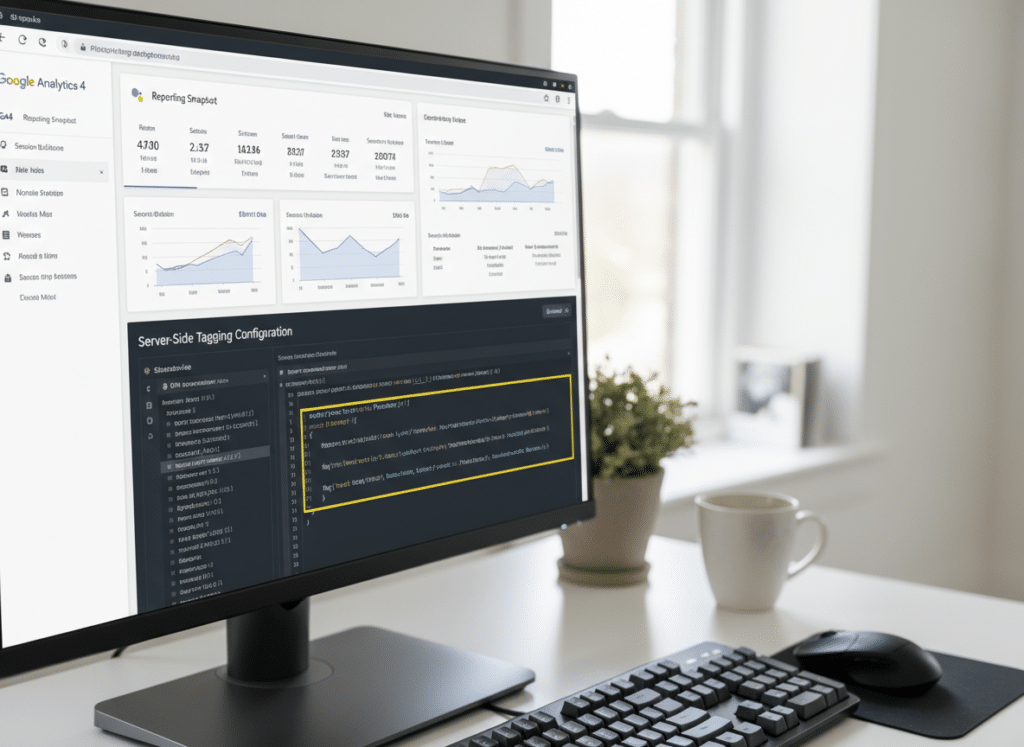
The Conversion Tracking Checklist
To scale google ads profitably, your account needs a “single source of truth.” This starts with:
- GA4 Integration: Ensure your Google Analytics 4 is not just installed, but properly communicating with Google Ads.
- Server-Side Tagging: With privacy changes and cookie deprecation, standard pixel tracking can miss 15% to 30% of conversions. Server-side tracking ensures your data remains accurate even when browsers try to block it.
- Enhanced Conversions: This allows Google to use hashed, first-party data (like email addresses) to “recover” conversions that would otherwise be lost. You can find technical details on Google’s official documentation.
- Consent Mode V2: Especially relevant if you operate in regions with strict privacy laws, this ensures you stay compliant while still modeling data for users who opt out of cookies.
We often see accounts where a conversion is counted twice or not at all. This is why we recommend you how to audit your Google Ads account before making any major moves. A deep dive into your settings can reveal “zombie” tags that are inflating your ROAS and giving you a false sense of security. To keep your growth sustainable, you must stop wasting ad spend: master your Google ads account audit and ensure every dollar is accounted for.
Identifying When Your Account is Ready for Expansion
One of the biggest mistakes we see is scaling a campaign that isn’t actually “ready.” Scaling is a multiplier; it multiplies your successes, but it also multiplies your waste. So, how do you know if is it time to increase your AdWords budget?
The Readiness Signals
We look for specific technical indicators before green-lighting a budget increase:
- Impression Share (IS): If your Search Impression Share is above 50% but you are losing a significant portion to “Budget” rather than “Rank,” you have a clear green light. This means the demand is there, but your wallet is closed.
- Learning Phase Stability: Your campaigns should be out of the “Learning” status for at least 14 days. If the algorithm is still “figuring things out,” a budget spike will reset its progress.
- ROAS/CPA Consistency: You should meet or exceed your goal for at least 30 consecutive days. Scaling on a “lucky week” is a recipe for a “painful month.”
- Conversion Volume: For Smart Bidding to work effectively, we generally want to see at least 30-50 conversions per month in a campaign before pushing it hard.
Understanding these metrics is part of the ultimate guide to Google ads analysis. If you don’t know your numbers, you don’t know your business. Mastering the art of expansion: scaling your Google ads campaigns for maximum impact requires a disciplined approach to these signals.
Distinguishing Demand Capture from Demand Creation to Scale Google Ads Profitably
There is a hard ceiling to Search ads. Only about 3% of your total market is actively “in-market” and ready to buy right now. If you only focus on keywords like “buy leather boots,” you are competing in a tiny, expensive pond with every other competitor. This is “Demand Capture.”
To truly scale google ads profitably past a certain point, you must move into “Demand Creation.” This involves reaching the other 97% of the market who doesn’t know they need you yet.
- YouTube Ads: Excellent for building brand affinity and showing your product in action.
- Demand Gen Campaigns: These use visually rich ads across YouTube, Discover, and Gmail to find new audiences based on your best-performing customer signals.
- Audience Signals: Instead of just targeting keywords, we feed Google “Customer Match” lists (emails of your best buyers). The AI then finds “Lookalikes” who share those characteristics.
As we explain in the performance playbook: mastering Google ads for maximum impact, shifting from purely reactive bidding to proactive audience building is how you break through revenue plateaus. This is often where how ppc consultants scale google adwords campaigns by looking at the full funnel rather than just the bottom of it.
Strategic Campaign Structures for 2025
The “old way” of Google Ads involved hundreds of tiny ad groups with granular keyword control. In 2025, that structure actually hinders the AI. Today, a “Hybrid” structure is the gold standard for those looking to scale google ads profitably.
| Campaign Type | Role in Scaling | Best For |
|---|---|---|
| Performance Max (PMax) | The “Growth Engine” | Finding conversions across all Google channels (YouTube, Search, Display) |
| Search (Exact/Phrase) | The “Stabilizer” | Protecting brand terms and capturing high-intent “bottom funnel” traffic |
| Standard Shopping | The “Control Layer” | Granular product testing and managing specific ROAS targets for e-commerce |
For e-commerce brands, feed optimization is the new keyword research. Your product titles should include the problem solved, the intended user, and unique qualities. For example, changing “Women’s Boots” to “Women’s Waterproof Leather Hiking Boots – Anti-Slip Winter Outdoor Shoes” can increase ROAS by 20–60%. This is the level of detail we provide with our AdWords management service for your enterprise.
By moving from good to great: how to optimize your Google ads campaigns, you allow the machine learning to test assets while you maintain strategic control over the “what” and “who.”
Using Product Segmentation to Scale Google Ads Profitably
Not all products are created equal. If you lump your $10 socks with your $200 boots in the same campaign, Google will likely spend your budget on the socks because they are easier to sell, even if they aren’t profitable after shipping and ad costs.
To scale google ads profitably, we use a “Tiered” segmentation strategy:
- Hero Products (The Top 20%): These drive 80% of your revenue. They get their own campaigns with aggressive budgets.
- Contributor Products: Solid performers that need a steady hand and moderate ROAS targets.
- Zombie Products: Items that get clicks but no sales. We isolate these into a “Low Bid” campaign or pause them entirely to stop the bleed.
We use Custom Labels in your product feed to group items by margin. This allows for “Margin-Based Bidding,” where you can afford a lower ROAS on high-margin items because the actual profit is higher. Before you scale, you should audit your e-commerce Google ads: a step-by-step blueprint to identify these tiers. Often, why your Google ads fail and how to fix them for more conversions is simply a matter of the wrong product getting all the attention.
The Safest Way to Increase Budgets and Bids
If you double your budget overnight, Google’s algorithm will panic. It will go out and find “junk” traffic just to meet your new spend target, causing your ROAS to crater.
The 20% Rule
The safest way to scale google ads profitably is the 20% Rule:
- Increase your daily budget by no more than 20% every 3 to 7 days.
- Observe: Wait for the “Learning” status to disappear and for the ROAS to stabilize at the new spend level.
- Repeat: If performance holds, go another 20%.
This gradual ramp-up allows the AI to find incremental pockets of high-quality users without spiking your Cost Per Click (CPC). We also utilize Smart Bidding (Target ROAS or Target CPA) to let Google’s “Auction-Time Bidding” handle the millions of signals (location, time of day, device) that a human simply can’t process.
There are many 5 ways to scale AdWords accounts using conversion data, but none are as effective as letting the data dictate the pace. By mastering Google ads: expert strategies for peak performance, you learn that patience is often the most profitable strategy in the account.
Frequently Asked Questions about Scaling Google Ads
How often should I increase my daily budget?
We recommend waiting at least 3–5 days between increases, though 7 days is safer for accounts with lower conversion volume. This gives the algorithm enough time to “settle” into the new spending tier. If you see a sudden spike in CPA, stop and wait another week before making further changes.
Why does my ROAS drop when I increase spend?
This is known as “diminishing returns.” As you spend more, Google has to reach people who are slightly less “ready to buy” than your core audience. To counter this, you must improve your “Demand Creation” (ads and creatives) and optimize your landing pages to convert that colder traffic more effectively.
Is Performance Max better than Search for scaling?
In 2025, PMax is generally the superior “scaler” because it has more “surface area” (YouTube, Gmail, Display). However, Search remains the better “stabilizer.” A healthy account uses PMax to find new customers and Search to ensure you aren’t losing your most valuable, high-intent traffic to competitors.
Conclusion
Scaling isn’t just about spending more money; it’s about building a system that can handle growth. By fixing your tracking foundations, identifying the right signals, and using a hybrid campaign structure, you can scale google ads profitably and turn your advertising into a predictable revenue engine.
At Yael Consulting, we don’t believe in “set it and forget it.” We are a boutique agency with over 15 years of expertise, offering one-client-per-market exclusivity to ensure your success is our only priority in your niche. Our CEO is directly involved in every strategy, utilizing proprietary technology to find the wins that others miss.
Ready to see exactly where your account is leaking money and how to fix it? We offer a free, actionable 15-minute Google Ads analysis with guaranteed value. No fluff, just a Special Ops-style breakdown of your path to profit.
Explore our AdWords Management Services and let’s start scaling the right way.