

Why Scaling Google Ads Requires a New Playbook
Scaling Google Ads isn’t just about throwing more money at your campaigns. Here’s what you need to know:
- Use the 20% Rule: Increase budgets by no more than 20-30% every 3-5 days
- Expect a Learning Phase: Allow 1-2 weeks for Google’s algorithm to re-optimize after each increase
- Monitor Key Metrics: Watch CPA, ROAS, and Impression Share closely during scaling
- Fix Your Foundation First: Ensure accurate conversion tracking and healthy account structure before scaling
- Choose Your Path: Scale vertically (increase proven campaign budgets) or horizontally (expand to new audiences and campaigns)
If you’ve ever tried to scale your Google Ads campaigns only to watch your cost per acquisition (CPA) skyrocket, you’re not alone. The frustration is real: a campaign performs beautifully at $1,000 per day, hitting your target CPA of $100. You increase the budget to $1,500, and suddenly your CPA jumps to $150 or higher. What happened?
The answer lies in how dramatically Google Ads has changed. The platform is now heavily driven by machine learning and sophisticated algorithms. The old days of Single Keyword Ad Groups (SKAGs) and manual CPC bidding are gone. Today, scaling requires working with Google’s AI, not against it.
When you dramatically increase campaign budgets, you force Google’s algorithm into new auction environments it hasn’t optimized for. Different bid dynamics, audience behaviors, and optimization challenges emerge. The algorithm needs time to learn these new signals—which is why sudden budget jumps often backfire, triggering what’s called a “learning phase” where performance temporarily dips.
The solution? A methodical, data-driven approach called the stair-step scaling method. Instead of massive budget leaps, you make small, incremental increases (typically 20% at a time) and allow 1-2 weeks for the algorithm to re-optimize. This approach works with machine learning, leading to sustainable growth without destroying your campaign performance.
But before you can scale at all, you need a rock-solid foundation. That means accurate conversion tracking (including server-side tracking and Improved Conversions), a properly structured account, and a clear understanding of your true profitability metrics like Marketing Efficiency Ratio (MER) and blended ROAS—not just the ROAS Google reports.
I’m Lior Krolewicz, an ex-Special Ops commander turned Google Ads expert who has spent 15 years helping businesses scale profitably through optimized campaigns. Over that time, I’ve developed proprietary systems for Scaling Google Ads that have helped clients increase revenue by millions while maintaining healthy profit margins. In this guide, I’ll walk you through the exact framework my team at Yael Consulting uses to scale campaigns from $5,000 to $40,000+ per month without the CPA spikes that sink most advertisers.

Why Yesterday’s Scaling Tactics Fail in Today’s AI-Driven Google Ads
The landscape of Google Ads has undergone fundamental changes that make scaling more challenging today than ever before. Gone are the days when simply increasing your budget guaranteed a proportionate rise in conversions. The platform is now heavily driven by machine learning and sophisticated algorithms, making old tactics like rigid Single Keyword Ad Groups (SKAGs) and purely manual CPC bidding less effective.
Today, AI influences nearly every auction, and privacy constraints have rewritten the rules of measurement. This shift to an AI-first logic, coupled with privacy limitations and auction volatility, means that increasing your budget by 50-100% no longer guarantees proportional conversion rises. When we make large, sudden budget jumps, we force Google’s algorithm into new, unoptimized auction environments. These environments come with different bid dynamics, audience behaviors, and optimization challenges that the algorithm hasn’t had time to learn. This often triggers a “learning phase” where performance temporarily dips, leading to CPA spikes. The algorithm simply needs time to learn these new signals and effectively map out these new competitive territories. This is why sudden budget jumps often backfire and can overwhelm the algorithm’s ability to optimize efficiently. You can learn more about why sudden budget jumps backfire.
Furthermore, a significant portion of ad spend, an average of 60.73% across many audited accounts, is spent on search terms that never convert. This wasted ad spend means that for every 10% increase in wasted spend, your cost-per-conversion can increase by 44-72%. This highlights the importance of precision in today’s scaling efforts. As we often tell our clients, without fixing underlying conversion issues or tracking performance properly, more ad spend often means more wasted dollars. To avoid common pitfalls, it’s crucial to understand 4 Mistakes to Avoid for More Successful Adwords Campaigns.
The New Reality of Google’s Algorithm
Google’s AI is now the undeniable backbone of the Google Ads platform. This means a heavy dependency on automation and a shift from granular manual control to a partnership with the algorithm. We’re operating in a “black box” scenario where understanding the algorithm’s behavior is key to successful Scaling Google Ads.
A major shift for e-commerce, for instance, is that Performance Max (PMax) campaigns are increasingly replacing traditional Shopping campaigns as the core engine for scaling, often driving 85-100% of the spend. This AI-driven campaign type leverages Google’s full inventory across all channels. For Search campaigns, their role has evolved from primary scaling engines to supporting acts, offering stability and capturing high-intent queries that PMax might miss. In this new reality, creative quality also matters significantly more than just bids alone, as it’s a primary signal for Google’s AI. AI bidding strategies now rely heavily on first-party data, including customer match, improved conversions, server-side tracking, and predictive signals, making robust data infrastructure non-negotiable.
Common Scaling Pitfalls and How to Avoid Them
When we start on Scaling Google Ads, several common mistakes can derail even the most promising campaigns:
- Sudden Budget Jumps: As discussed, dramatically increasing budgets without allowing the algorithm to adjust can lead to immediate CPA spikes and an extended learning phase. This is one of the quickest ways to burn through budget inefficiently.
- Ignoring the Learning Phase: Panic often sets in when performance dips during the learning phase. Making hasty changes during this critical period can reset the learning, prolonging the instability and hindering optimization.
- Poor Data Tracking: Without accurate conversion tracking, we’re flying blind. We can’t identify what’s truly working, leading to misinformed scaling decisions. This often means turning off profitable campaigns or continuing to run unprofitable ones.
- Neglecting Creative Refresh: Even the best ad copy and visuals experience fatigue. Failing to continuously test and refresh creatives can lead to diminishing returns, especially as you scale to broader audiences.
- Automated Bidding Without Clear Targets: While Smart Bidding is powerful, allowing it to run without specific Target CPA or Target ROAS goals can lead to uncontrolled spending and missed profitability targets.
- Over-reliance on Broad Match: While broad match keywords have evolved, using them without a robust negative keyword list can quickly lead to wasted spend on irrelevant searches.
To truly scale effectively, we must avoid these pitfalls and build a strategy rooted in data, structure, and continuous optimization. These are just some of The 5 Don’ts That Could Sink Your Adwords Account.
Building Your Foundation: Pre-Scaling Essentials
Before we even think about increasing budgets, we need to ensure our Google Ads account has a rock-solid foundation. Think of it like building a skyscraper – you wouldn’t start adding floors without ensuring the groundwork is perfectly stable. For Scaling Google Ads, this means impeccable data accuracy, a well-structured account, and optimized budget allocation.
Mastering Your Metrics Before You Scale
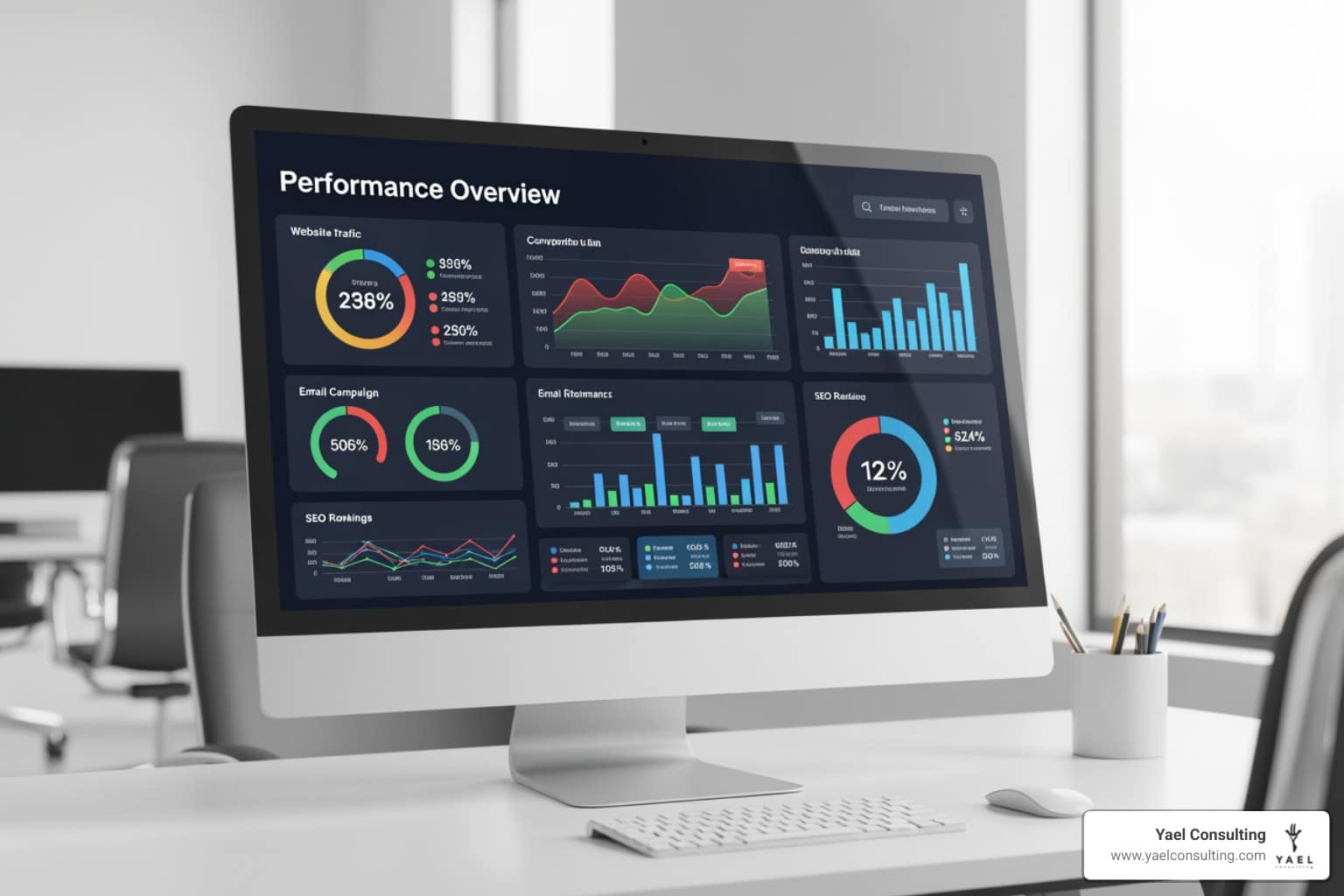
To scale profitably, we must understand and monitor the right metrics. It’s not just about clicks and impressions; it’s about business outcomes. Key Performance Indicators (KPIs) like Cost Per Acquisition (CPA) and Return On Ad Spend (ROAS) are crucial, but we need to look beyond last-click ROAS to understand true profitability.
This is where Marketing Efficiency Ratio (MER) and blended ROAS come into play. MER compares your total revenue to your total marketing spend across all channels, giving us a holistic view of overall marketing effectiveness. For e-commerce brands, a healthy MER typically falls in the 3.0-5.0 range. Blended ROAS complements this by tracking channel performance within the broader marketing system, preventing us from making decisions based on isolated data. By focusing on these system-level metrics, we can make strategic budget allocation decisions that drive real business impact.
We also closely monitor Impression Share Lost to Budget. If our impression share is low due to budget limitations, it signals a significant opportunity for Scaling Google Ads by increasing our budget in that area. We analyze keyword performance and search terms to ensure every dollar is invested in quality leads. Attribution analysis helps us understand the full customer journey, crediting all valuable touchpoints rather than just the last click. Understanding these metrics is vital for What Google Adwords Metrics Should I Be Looking At?.
The Critical Role of Accurate Conversion Tracking
This cannot be stressed enough: accurate data tracking is paramount for successful Scaling Google Ads. Without it, we’re essentially guessing, and scaling based on guesswork is a recipe for disaster. We’ve seen how an ad reporting 8 calls when it was actually 6, or showing 0 calls when there were 4, can lead to turning off profitable campaigns or wasting money on underperforming ones.
The average conversion rate for accurately tracked Google Ads accounts is 3.16%, significantly higher than the 2.18% for all tracked accounts. Unfortunately, about 42.3% of Google Ads accounts lack effective conversion tracking, meaning they have no idea if their campaigns are working. Of those that do track, only about half are tracking anything meaningful.
To combat these issues and the increasing privacy constraints, we prioritize robust conversion tracking infrastructure. This includes:
- Improved Conversions: This feature improves the accuracy of conversion measurement by using hashed first-party data from your website in a privacy-safe way.
- Server-Side Tracking: This method captures conversions more reliably, often increasing tracked conversions by an average of 12% compared to standard browser tracking. It helps overcome browser limitations and cookie restrictions.
- Offline Conversion Import: For businesses with longer sales cycles or offline conversions, importing this data back into Google Ads is crucial. It feeds Google’s AI with a complete picture of customer value, allowing for more intelligent optimization.
Accurate conversion data, including insights from What are Attribution Models in Google Adwords?, allows us to scale effectively by feeding high-quality, relevant data into Google’s machine learning models. This is how we gain a competitive edge and ensure every scaling decision is data-driven. You can read more about Scaling Google Ads Accounts Using Conversion Data.
The Stair-Step Method: Your Blueprint for Scaling Google Ads Profitably
The stair-step scaling method is our proven blueprint for Scaling Google Ads profitably. It’s a methodical, data-driven approach that works with Google’s machine learning algorithms, rather than against them. Instead of making large, risky budget leaps, we implement small, incremental increases, allowing the algorithm time to adjust and re-optimize.
Applying the 20% Rule in Practice for Scaling Google Ads
The core of the stair-step method is the 20% rule. This means we increase campaign budgets by no more than 20% at a time. After each increase, we allow 1-2 weeks for the algorithm to re-optimize and stabilize before considering another increase. This patient approach prevents the system from being overwhelmed and ensures sustainable growth.
The impact of campaign size on this rule is important. For smaller budget campaigns (under $100/day), there’s typically more flexibility. You might be able to double a $25/day campaign to $50/day without significant issues. However, for medium to large budgets ($100+/day), strict adherence to the 20% rule becomes critical. As campaigns grow, the competitive landscape changes rapidly with larger budget increases, making the algorithm’s learning more volatile.
For example, our experience has shown that when scaling past $240/day, we might increase by 50% daily, and past $500/day, we might increase by 25% daily, always based on consistent performance. The key is patience and discipline. We document every change and monitor KPIs closely, only moving to the next step once performance has stabilized at the new spend level. This methodical approach is why we recommend assessing Is It Time to Increase Your Adwords Budget? systematically.
Navigating the ‘Learning Phase’ Without Panic
Every time we make a significant change to a Google Ads campaign, especially a budget increase, the algorithm enters a “learning phase.” This is a period where Google’s system gathers new data to understand how to optimize performance at the new settings. During this phase, it’s common and expected to see a temporary rise in CPA or a dip in ROAS.
The learning phase typically lasts 1-2 weeks, though stabilization can take anywhere from 7-21 days depending on the budget velocity. The hardest part for many advertisers is resisting the urge to make mid-phase changes. We understand the panic that can set in when metrics temporarily worsen, but making additional adjustments during this period often resets the learning, prolonging the instability.
We monitor key indicators and red flags during this process. An expected CPA rise during the first week or two is normal. What we look for is a gradual improvement back towards our target metrics and overall campaign stability. Red flags include a CPA that continues rising after two weeks, a complete loss of conversions, or performance that simply never stabilizes. If these red flags appear, we’ll dial back the budget increase or investigate other campaign-level issues. Patience, dear friends, is a virtue when working with Google’s AI!
Advanced Scaling Levers: Expanding Your Reach and Impact
Once we have our foundation solid and are adept at the stair-step method, we can pull on more advanced levers to further accelerate Scaling Google Ads. This involves a strategic balance between vertical and horizontal scaling, coupled with smart audience, keyword, and creative expansion.
Vertical vs. Horizontal: Two Paths for Scaling Google Ads
When it comes to Scaling Google Ads, we typically consider two main approaches:
| Feature | Vertical Scaling | Horizontal Scaling |
|---|---|---|
| Definition | Increasing budget on existing, proven campaigns. | Expanding to new audiences, keywords, or channels. |
| Goal | Maximize performance within current successful areas. | Find new growth opportunities and market segments. |
| Risk | Lower risk, but can hit saturation point. | Higher initial risk, potential efficiency drops. |
| Efficiency | Maintains efficiency if not saturated. | Typically 15-30% efficiency drop initially. |
| Optimization | Refine existing targeting, bids, and creatives. | Requires 60-90 day optimization period for new areas. |
| Application | When current campaigns are highly profitable and have room for more spend. | When current campaigns are nearing saturation or to diversify reach. |
Vertical scaling is about going deeper: investing more into what’s already working. If a campaign is consistently hitting your ROAS targets and still has impression share lost to budget, we’ll continue to increase its budget incrementally. This is often the safest and most immediate path to growth.
Horizontal scaling, on the other hand, is about going wider: expanding into new audience segments, exploring new keyword themes, or launching campaigns on different Google networks (like Display or YouTube). This approach often comes with an initial efficiency drop of 15-30% as the algorithms learn the new territory. We plan for a 60-90 day optimization period for horizontal scaling before expecting it to match the efficiency of our core campaigns. Performance Max campaigns, for instance, can be a powerful tool for horizontal scaling, allowing us to access new inventory and audiences. Our PPC consultants are experts at this balance, and you can learn more about How PPC Consultants Scale Google Ads Campaigns.
Opening Up New Growth with Audience, Keyword, and Creative Expansion
To truly open up new growth, we leverage a combination of sophisticated targeting and optimization strategies:
- Audience Targeting:
- Broad Audiences: With accurate offline conversion data, broad audiences can work exceptionally well on Google Ads, feeding Google’s AI with rich signals.
- Intent Audiences: We create custom segments by loading keywords that our target market would be actively searching for. This allows Google to target users expressing clear intent.
- In-Market Segments: These are Google’s pre-defined audiences of users actively researching products or services similar to yours, indicating a strong purchase intent.
- First-Party Data (Customer Match): Leveraging your CRM data to upload customer lists allows for highly personalized campaigns and helps create valuable lookalike audiences. We aim to add new audiences every 14 days to keep our targeting fresh and expansive.
- Similar Audiences: On YouTube, these are Google’s version of lookalike audiences, finding users similar to your existing converting customers.
- Keyword Strategy:
- Broad Match Keywords: While once a wild card, today’s AI-improved broad match, when paired with Smart Bidding and a robust negative keyword list, can be a powerful tool for findy and scale. However, it’s only truly effective if conversion tracking is perfect and you have high-LTV customers.
- Themed Ad Groups: The old SKAGs (Single Keyword Ad Groups) are largely being replaced by themed ad groups. This provides broader data for machine learning optimization, improving efficiency and leveraging Google’s AI more effectively. We constantly refine negative keywords to filter out irrelevant traffic. You can explore more about How to Use Keyword Match Types.
- Creative Optimization:
- Ad Copy Testing: Creative quality matters more than ever. We continuously test different headlines, descriptions, and calls to action to speak to audience pain points and desires. Responsive Search Ads (RSAs) are invaluable here, as they automatically test combinations to find the best performers. You can find tips on How to Write Effective Ad Copy on Google Adwords.
- Visuals & Video: YouTube continues to dominate as the second-largest search engine. Video and Display Ads are crucial for expanding reach beyond search and are mandatory for Performance Max campaigns to fully explore their potential. We leverage Creative Video Tools & Resources to create engaging visual assets.
- CPV Bidding for YouTube: For YouTube campaigns, maximizing Cost Per View (CPV) bidding can be highly effective in less competitive placement scenarios, ensuring your ads get seen by relevant viewers.
By continuously experimenting and optimizing across these dimensions, we ensure our Scaling Google Ads efforts are not just bigger, but smarter and more impactful.
Frequently Asked Questions about Scaling Google Ads
We often get asked similar questions when clients are looking to scale their Google Ads accounts. Here are some of the most common ones:
How long does the Google Ads ‘learning phase’ last after a budget increase?
The Google Ads ‘learning phase’ typically lasts 1-2 weeks after a significant budget increase or other major campaign change. During this time, Google’s algorithms are collecting data and adjusting bids to optimize performance under the new conditions. While performance might be volatile initially, stabilization usually occurs within 7-21 days depending on the velocity of the budget increase. It’s crucial to exercise patience and avoid making further changes during this period, as it can reset the learning process.
Is it ever safe to increase my Google Ads budget by more than 20%?
For most campaigns, particularly those with medium to large budgets ($100+/day), adhering to the 20% rule is critical for maintaining efficiency and avoiding CPA spikes. However, for very small budget campaigns (e.g., under $100/day), there can be more flexibility. For instance, increasing a $25/day campaign to $50/day might be acceptable without causing significant disruption. The key is to understand the trade-off between speed and efficiency. Larger jumps carry a higher risk of efficiency drops, so it’s a decision that needs to be weighed carefully against your risk tolerance and performance stability.
What’s the first thing to check if my CPA skyrockets after scaling?
If your CPA suddenly skyrockets after increasing your budget, the very first thing to check is whether your campaign is still in its learning phase. If the budget increase was recent (within the last 1-2 weeks), a temporary CPA rise is expected. Give it a few more days to see if performance begins to stabilize. If the CPA continues to rise after two weeks, or if you’re experiencing a complete loss of conversions, then it’s time to investigate further. We would then review auction insights for competitive shifts, check for audience saturation, analyze creative fatigue, and ensure your conversion tracking is still firing accurately. Sometimes, simply dialing back the budget slightly can help the algorithm regain stability. For a deeper dive into troubleshooting, we recommend a thorough How to Audit Your Google Ads Account.
Conclusion: Scale Smarter, Not Bigger
Scaling Google Ads in today’s AI-driven landscape is less about brute force and more about strategic finesse. As we’ve explored, successful expansion hinges on a methodical process, a deep understanding of Google’s machine learning, and a solid foundation built on accurate data and optimized account structures.
From embracing the stair-step method and its 20% rule to navigating the learning phase with patience, and strategically applying vertical and horizontal scaling, every step must be data-driven. We’ve seen how critical accurate conversion tracking, robust metrics like MER and blended ROAS, and continuous optimization of audiences, keywords, and creatives are to sustained growth.
At Yael Consulting, we’ve spent 15 years refining these advanced strategies for Scaling Google Ads. Our proprietary technology and direct CEO involvement ensure that our clients, who benefit from one-client-per-market exclusivity, achieve significant sales and profit growth in locations like New York, Los Angeles, and across the USA and Israel. We believe in scaling smarter, not just bigger, helping businesses like yours achieve maximum impact without the common pitfalls.
Ready to transform your Google Ads performance and open up your true growth potential? Learn more about our Google Ads consultant services and see how our expert team can help you scale profitably.