
Phase 1: Strategic Foundation for Lead Generation Campaign Setup
Before we spend a single dollar on ads, we need to build the “blueprint” for our campaign. Jumping straight into keyword research without a strategy is like trying to sail a ship without a compass—you’ll move, but you probably won’t like where you end up. A successful lead generation campaign setup begins with a deep understanding of who we are talking to and what we want them to do.
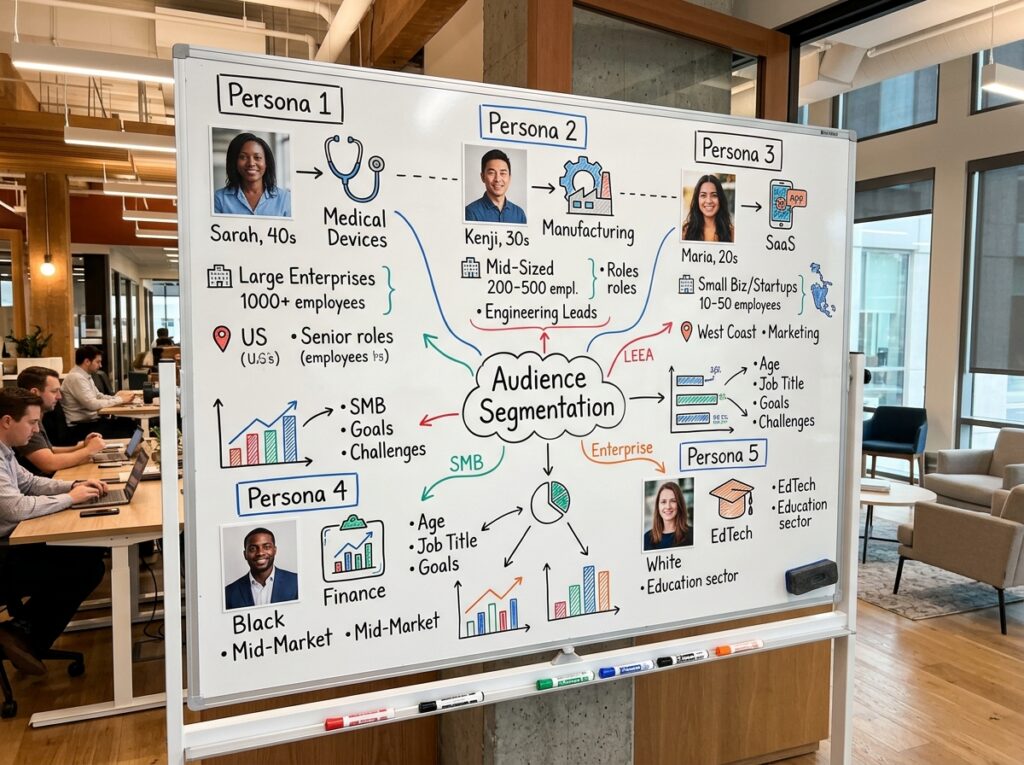
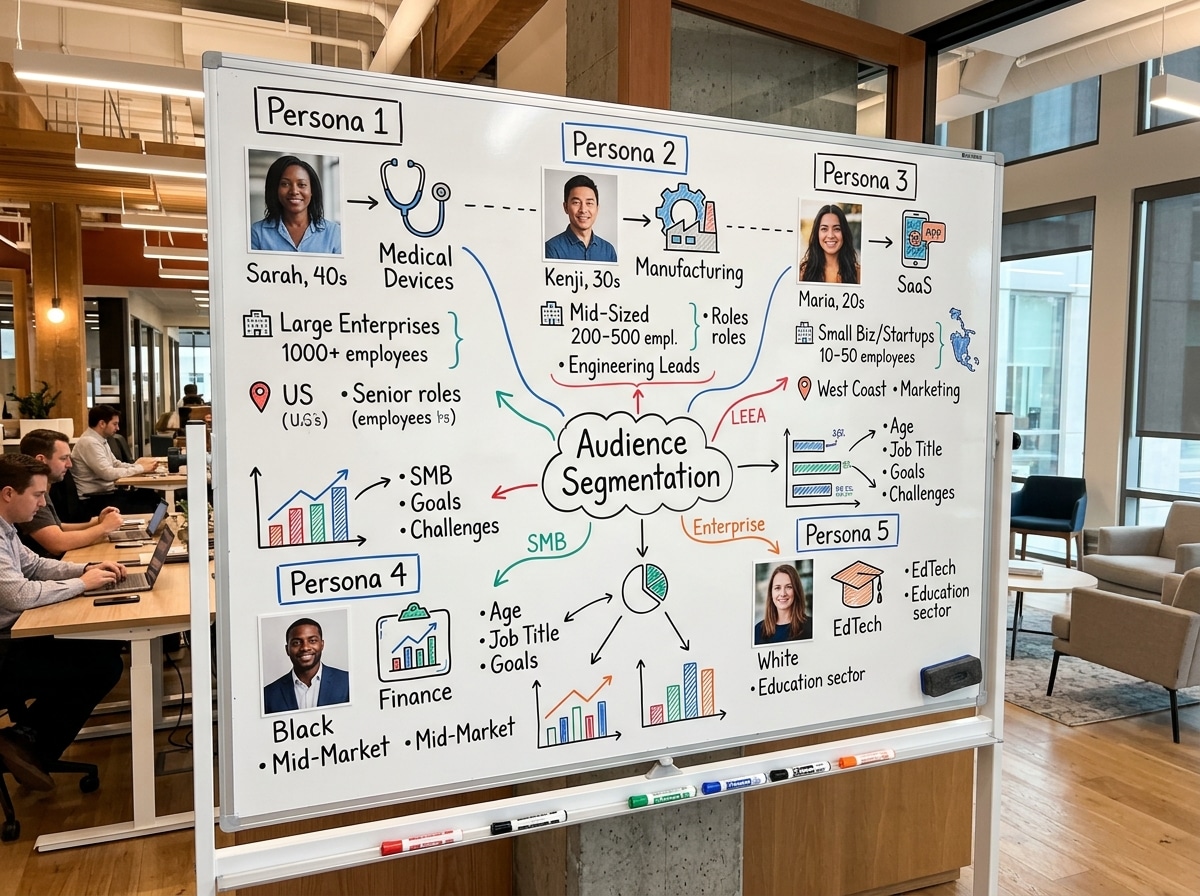
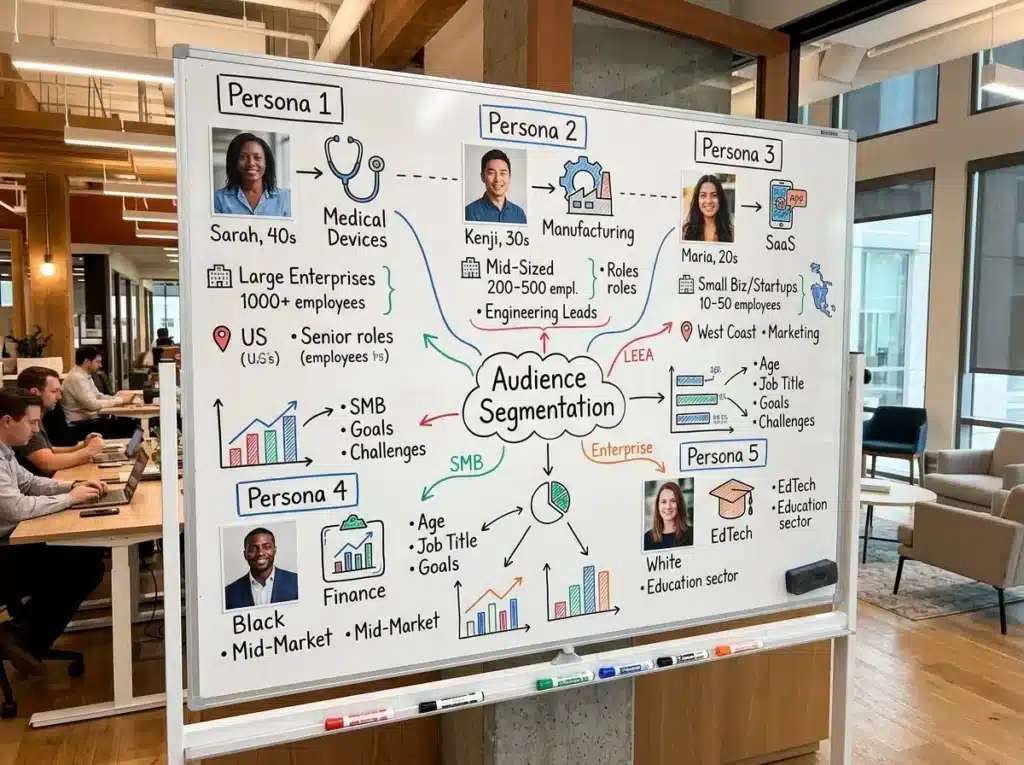
The first step is defining your Ideal Customer Profile (ICP). This isn’t just a vague idea of a customer; it’s a detailed description of the company or individual that gets the most value from your service. For B2B, this includes firmographics like company size, industry, and revenue. For B2C, we look at demographics and psychographics. Once the ICP is set, we create buyer personas—the actual humans within those companies who make the decisions. What are their daily headaches? What keeps them up at night?
We also need to set SMART goals (Specific, Measurable, Achievable, Relevant, and Time-bound). Instead of saying “we want more leads,” a SMART goal would be “generate 100 Marketing Qualified Leads from the medical device industry at a cost-per-lead under $50 by the end of Q3.” This clarity allows us to set up your AdWords account with a clear target in mind.
Following best practices for generating high-quality leads means mapping out the entire journey. You aren’t just looking for a click; you are looking for a customer.
Defining Success Metrics and Lead Types
Not all leads are created equal. If we treat a person who accidentally downloaded a checklist the same way we treat someone who requested a pricing demo, our sales team will quickly get frustrated. To keep everyone happy, we categorize leads into three main stages:
- Raw Leads: These are new contacts who have provided basic info but haven’t been vetted yet.
- Marketing Qualified Leads (MQLs): These leads fit our ICP and have shown meaningful engagement (e.g., attending a webinar).
- Sales Qualified Leads (SQLs): These are the “golden” leads. They have been vetted and are ready for a direct sales follow-up.
To measure if our lead generation campaign setup is actually working, we track the Conversion Rate (how many visitors become leads) and the Cost Per Lead (CPL). However, the ultimate metric is the Return on Investment (ROI). We use the formula: (Gain from Investment – Cost of Investment) / Cost of Investment x 100. Understanding these metrics helps us determine the best way to structure your AdWords campaigns to prioritize quality over sheer volume.
Identifying High-Intent Buying Signals
How do we know when someone is actually ready to buy? We look for intent signals. This is the difference between someone searching “what is lead generation” (informational intent) and “lead generation services for New York law firms” (transactional intent).
By analyzing search behavior and intent data, we can pinpoint prospects who are actively looking for a solution. This is where choosing the right keywords for AdWords becomes a superpower. We focus on high-intent phrases that suggest the user has a problem they need solved now. We also look at firmographics (like a company recently raising a round of funding) as a signal that they may be looking to scale their operations and need our help.
Phase 2: Building the High-Converting Campaign Engine
Once the strategy is set, it’s time to build the “engine”—the assets that will actually capture the leads. The heart of this engine is the lead magnet. This is the “bribe” you offer in exchange for a prospect’s contact information.
| Lead Magnet Type | Best For | Value Proposition |
|---|---|---|
| Whitepapers / Ebooks | Top of Funnel | Educates on a complex industry problem |
| Webinars | Middle of Funnel | Establishes authority and builds trust |
| ROI Calculators | Bottom of Funnel | Shows the tangible financial benefit of your tool |
| Free Audits / Demos | Bottom of Funnel | Direct interaction with your service |
A great lead magnet must solve an immediate problem. If it’s too generic, people won’t give up their email address. Once we have a strong offer, we need a place for them to land. Creating landing pages that convert is an art form. It should have one goal, a clear value proposition, and zero distractions (that means no navigation bars!).
Designing Assets for Lead Generation Campaign Setup
Your ad copy and creative assets are the “face” of your campaign. They need to be punchy, relevant, and include a clear Call to Action (CTA). We’ve found that writing effective ad copy on Google AdWords requires focusing on the benefit to the customer, not just the features of your product.
Don’t forget about mobile optimization. With over 76% of users on platforms like Reddit accessing content via mobile, your landing pages and forms must be thumb-friendly. Use large buttons, fast-loading images, and ensure the text is readable without zooming.
Reducing Friction in Lead Capture
Friction is the enemy of conversion. Every extra field you add to a form reduces the chance of someone completing it. We recommend keeping forms as short as possible—usually just name, email, and one qualifying question.
To boost trust, we use effective conversion boosters like:
- Social Proof: Logos of well-known clients or testimonials.
- Trust Signals: Security badges or “No credit card required” notes.
- ReCAPTCHA: To prevent bot spam while keeping the experience smooth for humans.
Phase 3: Multi-Channel Promotion and Lead Capture
Now that the engine is built, we need to drive traffic to it. A successful lead generation campaign setup rarely relies on just one channel. Instead, we use a multi-channel orchestration approach to meet prospects wherever they are.
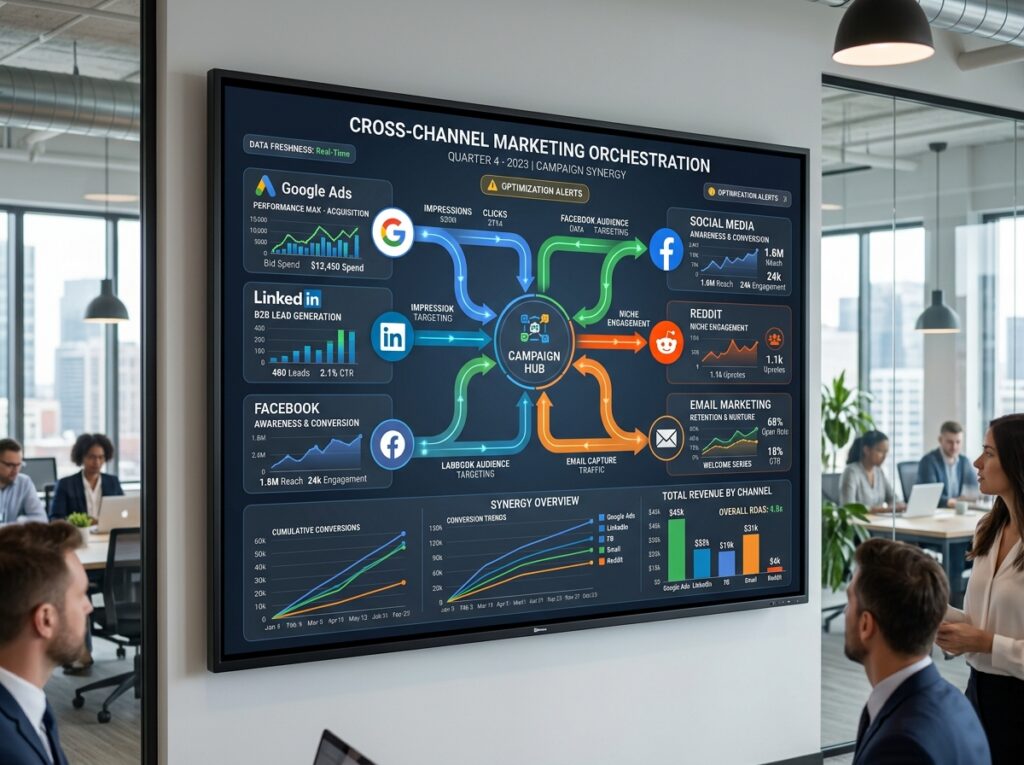
Google Ads: Perfect for capturing high-intent searchers. We can target people exactly when they are looking for our services. Google Ads lead generation is often the fastest way to see results.
- LinkedIn: The gold standard for B2B. 89% of B2B marketers use it, and 62% say it generates more leads than any other social platform.
- Reddit: A rising star for lead gen. Reddit campaigns can see 10x higher lifts in memorability. Users here trust the community, making it a great place to build brand favorability.
- Facebook: Excellent for retargeting. Their native lead ads auto-fill user data, which can drastically increase conversion rates on mobile.
- Email Marketing: Don’t underestimate the “old school” method. The ROI of email marketing can be as high as 4,200%, returning $42 for every $1 spent.
Technical Integration for Lead Generation Campaign Setup
To scale, you need automation. You shouldn’t be manually exporting leads from Facebook and importing them into your CRM. We use tools like Zapier to connect our ad platforms directly to our CRM (like Salesforce or HubSpot). This allows for real-time lead delivery, so your sales team can follow up while the lead is still “warm.”
We also implement lead scoring. This is a system that assigns points to leads based on their actions. Did they visit the pricing page? +10 points. Did they download a basic infographic? +2 points. When a lead hits a certain score, they are automatically flagged for sales. To ensure we are reaching the right people, we must also master how to use keyword match types to filter out irrelevant traffic.
Nurturing Leads Post-Capture
Most leads aren’t ready to buy the moment they fill out a form. They need “nurturing.” We set up automated email sequences that provide ongoing value over 2-3 weeks. The goal is to move them from a Raw Lead to an SQL by proving our expertise.
Personalization is key here. Using a lead’s name or referencing their specific industry makes a massive difference. We also use effective remarketing campaigns to stay top-of-mind. If someone visited our landing page but didn’t convert, we show them targeted ads on other sites to gently nudge them back.
Phase 4: Measuring and Optimizing for Maximum ROI
The “setup” is never truly finished; it’s an ongoing process of refinement. We constantly monitor KPIs like CPL, Customer Acquisition Cost (CAC), and overall conversion rate.
One of the most powerful tools in our arsenal is Value-Based Bidding. If you know that a lead from a “CEO” is worth ten times more than a lead from an “Assistant,” you can tell Google Ads to prioritize the more valuable leads. You can learn more about this in the value-based bidding for lead gen guide. We also perform regular audits of Google Ads accounts to find “leaks” where money is being wasted on non-converting terms.
Scaling Performance with Technology
To truly scale a lead generation campaign setup, we lean on AI and advanced tracking.
- Enhanced Conversions: This tool helps track conversions that happen off-platform or across different devices. Advertisers using this see an average of 10% more conversions.
- Performance Max: Google’s AI-powered campaign type that finds leads across Search, YouTube, Display, and Gmail simultaneously.
- A/B Testing: We never guess; we test. Whether it’s the headline of an ad or the color of a CTA button, setting up effective AB tests ensures we are always using the highest-performing version of our assets.
Frequently Asked Questions about Lead Generation
What is the difference between inbound and outbound lead generation?
Inbound lead generation is “permission marketing.” This is when you create valuable content (like this article!) that draws people to you. They “opt-in” to hear from you. It’s generally more cost-effective and builds long-term trust.
Outbound lead generation involves proactive outreach, like cold emailing or LinkedIn prospecting. While it can feel more “interruptive,” it is often faster for reaching a very specific, niche audience that might not be searching for you yet. In industries like financial services lead generation, a hybrid of both usually works best.
How do you align marketing and sales for better lead handoff?
The “gap” between marketing and sales is where revenue goes to die. To fix this, we create a Service Level Agreement (SLA) between the two teams. Marketing agrees to provide a certain number of SQLs, and Sales agrees to follow up within a specific timeframe (ideally under 24 hours).
Continuous feedback loops are vital. If Sales says the leads are “low quality,” Marketing needs to adjust the targeting or the qualifying questions in the form. This is especially important for professional services client acquisition, where the relationship starts the moment the lead is captured.
What are common mistakes to avoid in lead generation campaigns?
- Broad Targeting: Trying to talk to everyone means you talk to no one. Be specific.
- Weak Offers: If your lead magnet is just a “newsletter signup,” don’t expect many leads.
- Poor Tracking: If you don’t know which keyword generated the lead, you can’t optimize.
- Slow Follow-up: Leads go “cold” fast. If you wait three days to call, they’ve already moved on to a competitor.
For more tips, check out our 3 awesome PPC tips for qualified leads.
Conclusion
Setting up a lead generation campaign doesn’t have to feel like solving a Rubik’s Cube blindfolded. By following this checklist—building a strategic foundation, creating high-value assets, and using multi-channel automation—you can transform your marketing into a scalable revenue driver.
At Yael Consulting, we specialize in taking the guesswork out of this process. As a boutique Google Ads agency with over 15 years of expertise, we offer a unique approach: one-client-per-market exclusivity and direct CEO involvement in every account. We don’t just manage ads; we grow businesses.
Ready to see where your current setup is falling short? We offer a free, actionable 15-minute Google Ads analysis with guaranteed value. No fluff, just real data and a plan to increase your profit.
Get your free PPC analysis today and let’s start scaling your leads. For full-service growth, explore our expert Google Ads management services.