
Why Most E-commerce Stores Bleed Traffic (and How to Fix It)
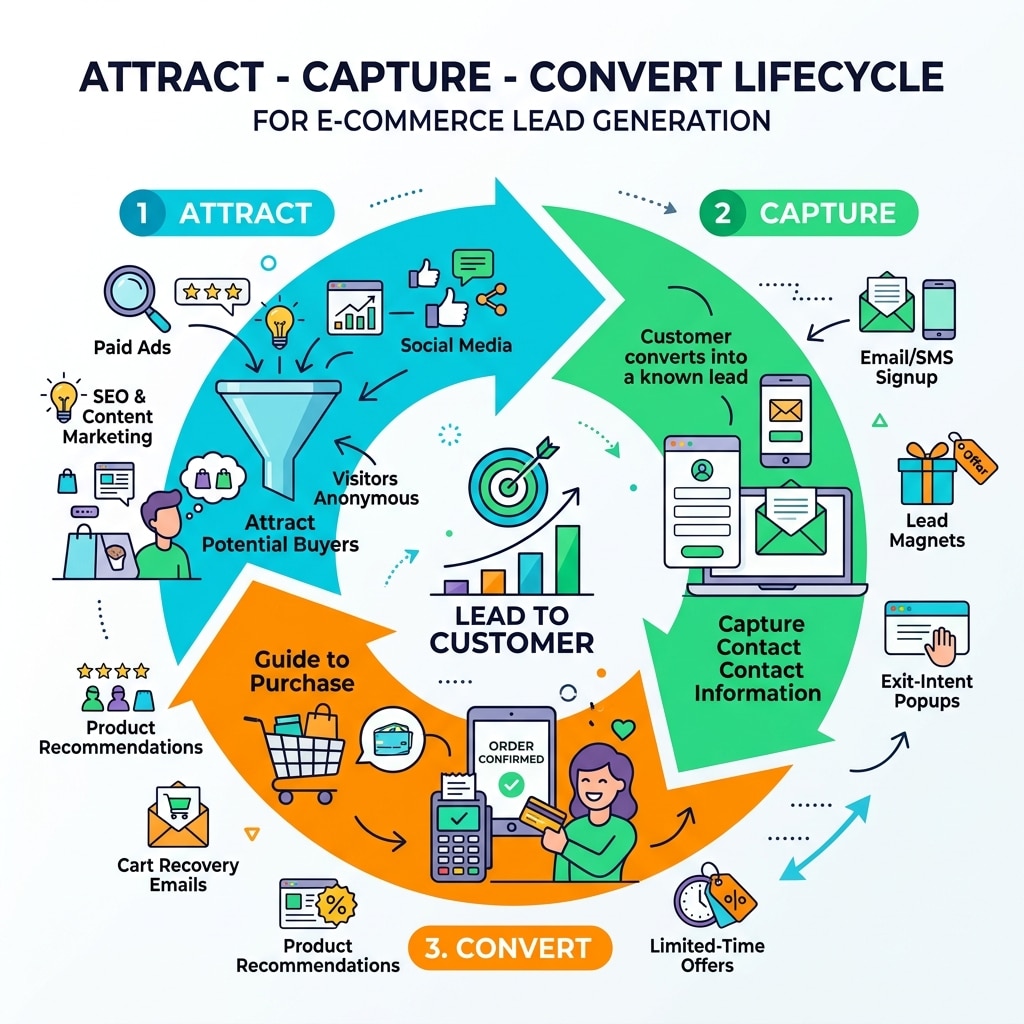
Lead generation for e-commerce is the process of attracting potential buyers, capturing their contact information, and guiding them toward a purchase, turning anonymous visitors into customers you can reach again and again.
Here’s a quick breakdown of the most effective ways to do it:
| Strategy | Best For | Speed |
|---|---|---|
| Email/SMS capture with lead magnets | All store types | Fast |
| SEO and content marketing | Long-term organic growth | Slow |
| Paid ads (Google, Meta, TikTok) | Immediate traffic | Fast |
| Exit-intent popups and quizzes | On-site conversion | Fast |
| Retargeting campaigns | Recovering lost visitors | Medium |
| Referral and loyalty programs | Retention and growth | Medium |
Here’s the uncomfortable truth: most e-commerce stores are leaking money.
Businesses generate an average of 1,877 leads per month, yet 80% of those leads never turn into a sale. Meanwhile, paid ad costs keep climbing, and conversion rates stay flat. You’re paying to drive traffic that simply disappears.
The problem isn’t traffic. It’s that most stores have no system to capture that traffic and follow up.
Without a lead generation strategy, you’re renting your audience from Google and Meta. The moment you stop paying, they’re gone. Building an owned audience, through email lists, SMS subscribers, and first-party data, is what separates stores that scale from stores that stagnate.
I’m Lior Krolewicz, a Google Ads expert and online marketing consultant with 15+ years of experience helping businesses optimize their ad spend and build scalable lead generation for e-commerce systems. Having directed millions in advertising dollars across industries, I know exactly where stores waste budget, and how to turn that around.
Terms related to lead generation for e-commerce:
- Google Ads lead generation campaign
- lead generation for financial services
- lead generation for professional services
Understanding Lead Generation for E-commerce
In the world of online retail, we often think of a “lead” as something reserved for B2B software or real estate. But in reality, every visitor who lands on your site is a potential lead. Lead generation for e-commerce is the art of identifying high-intent shoppers and getting them into your ecosystem before they bounce.
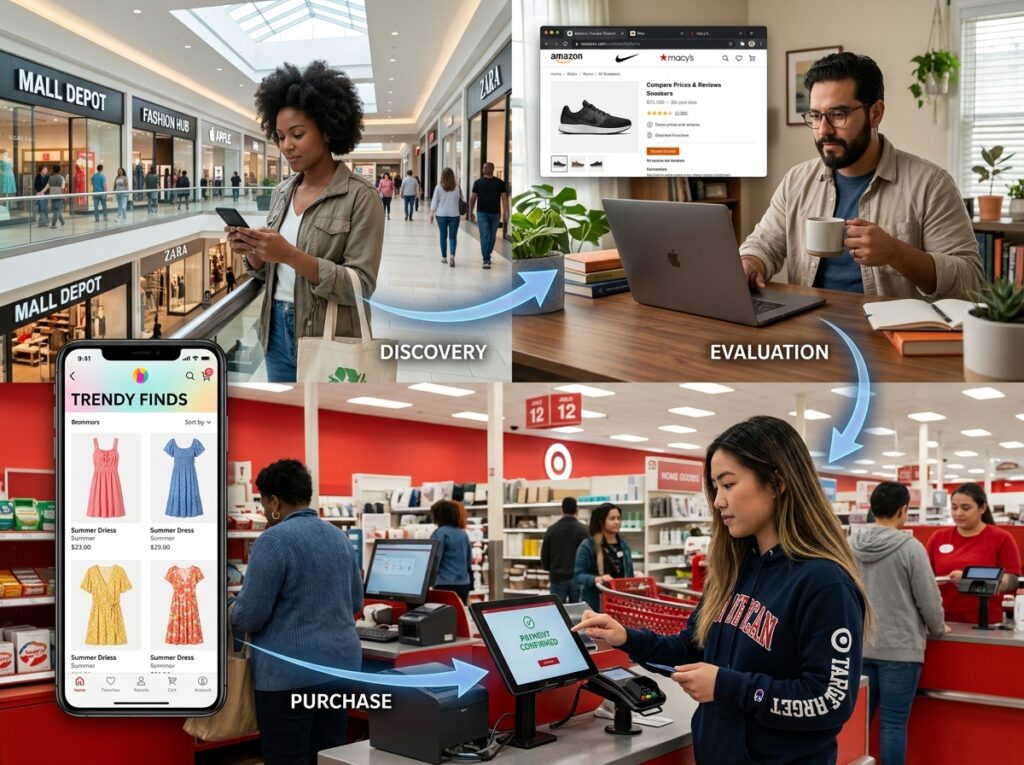
The statistics are sobering: while the average business generates nearly 1,900 leads monthly, a staggering 80% of those leads never convert. Why? Because e-commerce conversion rates typically hover between 1.5% and 3.0%. This means 97% of your hard-earned traffic is walking out the digital door without buying.
With rising ad costs and the deprecation of third-party cookies, we can no longer afford to rely on “rented” audiences. We must pivot toward capturing first-party data. This isn’t just a technical hurdle; it’s a trust hurdle. According to research on consumer trust, nearly 90% of customers trust online reviews as much as personal recommendations. Building a lead strategy allows us to leverage that trust and turn one-time browsers into lifelong fans.
Why Online Stores Need a Lead Strategy
If you treat every visitor like a “buy now or leave” proposition, you’re leaving money on the table. A robust lead strategy focuses on Customer Lifetime Value (LTV). By capturing an email or phone number, we can trigger automated sequences that nurture the relationship.
Think about it: email marketing returns an average of $36 for every $1 spent. It is the highest ROI channel available. When we use SMS triggers for cart abandonment or personalized product recommendations, we aren’t just selling; we’re providing a service. This level of scaling sales through management services is what allows a boutique store to compete with global giants.
Top Strategies for Lead Generation for E-commerce
To truly scale, we need a multi-channel approach. We shouldn’t just wait for people to find us; we need to meet them where they live—whether that’s on Google, TikTok, or in their own inbox.
Boosting Lead Generation for E-commerce with Targeted Ads
Paid advertising is the fastest way to inject high-intent traffic into your funnel. However, the “spray and pray” method is dead. Today, we use Google Ads to target specific search intent. If someone searches for “best waterproof hiking boots,” they are a high-intent lead.
We don’t just send them to a generic homepage. We drive them to personalized landing pages that mirror their search query. This consistency reduces friction and increases the likelihood of a lead capture. For those looking to dominate the social space, TikTok Shop integration has changed the game, allowing users to go from discovery to lead (or purchase) without ever leaving the app. To make this work, you need a killer e-commerce Google Ads strategy that prioritizes qualified clicks over raw volume.
Optimizing SEO and Content for Lead Generation for E-commerce
While ads provide speed, SEO provides sustainability. The SEO battleground has shifted toward AI search optimization. With Google’s AI Overviews, ranking on page one is no longer enough; you need to be the source that the AI cites.
This requires strong E-E-A-T signals (Experience, Expertise, Authoritativeness, and Trustworthiness). We achieve this by creating long-tail content that answers specific buyer questions. Instead of just targeting “running shoes,” we create content around “how to choose running shoes for flat feet.” This educational approach builds a “hub and spoke” model that naturally captures leads. For more on this, check out our e-commerce PPC tips from an expert.
High-Converting Lead Magnets and Website Tools
Once the traffic arrives, we need “hooks” to keep them. A lead magnet is an incentive you offer in exchange for contact information.
Common lead magnets include:
- Discount Codes: The classic “10% off your first order.”
- Free Shipping: A powerful motivator for first-time buyers.
- Exclusive Content: Buying guides, lookbooks, or “VIP” access to new drops.
| Lead Magnet Type | Average Conversion Rate | Effort to Create |
|---|---|---|
| Discount Code | 5% – 9% | Low |
| Interactive Quiz | 30% – 50% | High |
| Free Shipping | 4% – 7% | Low |
| Educational Guide | 2% – 5% | Medium |
Interactive Tools: Quizzes and Chatbots
In 2025 and 2026, static forms are being replaced by interactive experiences. Quizzes are particularly effective because they provide “zero-party data”—information the customer intentionally shares with you. A “Find Your Perfect Skincare Routine” quiz doesn’t just capture an email; it tells you exactly what products that person needs.
Interactive content sees 52.6% more engagement than static content. Similarly, conversational AI and chatbots provide real-time qualification. Instead of waiting for a form submission, a bot can answer questions and capture lead info 24/7, which is crucial since the probability of converting a lead drops by 80% if you don’t respond within the first five minutes.
Optimizing Capture Forms and CTAs
We’ve all seen popups that are impossible to close on a phone. Don’t be that store. Your capture forms must be mobile-friendly and frictionless. Reducing form fields from four to three can boost conversions by 50%.
We recommend using exit-intent technology—popups that only appear when a user is about to leave the site. This is your “hail mary” to turn a bounce into a lead. Use social logins (like “Sign up with Google”) to make the process one-click. When you drive more qualified leads, you ensure that your sales funnel is always full of high-intent prospects.
Advanced Tactics: Data Enrichment and AI Personalization
For larger stores, the “one size fits all” approach won’t cut it. We need to use data enrichment to understand who is visiting our site.
Tools like the Store Leads database and Apollo.io lead sourcing allow us to see technographic and firmographic data. For example, if you are a B2B e-commerce brand selling to other retailers, you can identify which stores are using Shopify or Magento and target them specifically. Integrating this data with your CRM allows for surgical precision in your outreach. This is a key part of how we audit e-commerce Google Ads to find hidden opportunities.
Automation and Nurturing Workflows
The real magic happens after the lead is captured. Behavioral triggers allow us to send the right message at the exact right time.
- Browse Abandonment: “We saw you looking at those sneakers… still interested?”
- Speed-to-Lead: Using automation to send a welcome discount within seconds of a signup.
- AI Personalization: Using past behavior to predict what a customer will want next.
According to Salesforce lead generation insights, businesses that prioritize lead nurturing see 50% more sales-ready leads at a 33% lower cost.
Step-by-Step Guide to Building Your Lead Gen Engine
Ready to stop bleeding traffic? Follow this blueprint to build a scalable system:
- Define Your Persona: Who is your ideal buyer? What are their pain points?
- Create Your Magnet: Offer something of genuine value (e.g., a “Winter Style Guide” or a 15% discount).
- Build the Landing Page: Keep it simple, mobile-responsive, and focused on a single CTA.
- Drive Traffic: Use a mix of winning lead gen campaigns via Google Ads and organic social.
- Score and Nurture: Use lead scoring to prioritize high-intent buyers and put them into an automated email/SMS flow.
- Track Everything: Measure your Cost Per Lead (CPL) and Conversion Rate to optimize your spend.
Frequently Asked Questions about E-commerce Lead Gen
What is the most effective lead magnet for online stores?
While discount codes have the highest immediate “grab,” interactive quizzes often produce higher-quality leads. A quiz provides you with data about the customer’s preferences, allowing for much more personalized (and successful) follow-up emails.
How do I measure the success of my lead generation efforts?
Look beyond just the number of emails collected. Key metrics include:
- Lead-to-Customer Conversion Rate: How many leads actually buy?
- Cost Per Lead (CPL): How much are you paying for each email?
- Revenue per Lead: The total sales generated from your lead list divided by the number of leads.
Can AI really improve my e-commerce conversion rates?
Yes. AI-powered chatbots can handle qualification and customer service 24/7, while AI-driven personalization engines can serve different content to different visitors based on their likelihood to buy. Brands using AI assistants often see a 15% to 30% boost in conversions.
Conclusion
Lead generation for e-commerce isn’t just a “nice-to-have” anymore—it’s the backbone of a sustainable business. By moving away from a total reliance on expensive ads and toward building an owned audience, you create a safety net for your brand’s growth.
At Yael Consulting, we’ve spent over 15 years mastering this balance. We aren’t a giant agency where you’ll be handed off to a junior account manager. We offer one-client-per-market exclusivity, meaning we are fully invested in your success. With direct CEO involvement and our proprietary technology, we help you find the “opportunity pockets” that others miss.
If you’re ready to see exactly where your Google Ads are falling short and how to turn your traffic into a lead-generating machine, we invite you to unlock growth with expert Google Ads Management. Let’s stop the bleeding and start scaling together.