
Mastering Lead Generation in Financial Services Where Money Talks

Why Lead Generation for Financial Services Demands a Modern Approach
Lead generation for financial services is no longer about cold calls and direct mail campaigns. Today’s most successful financial advisors and firms generate leads through strategic digital marketing, data-driven targeting, and trust-building content that meets prospects exactly where they are in their decision-making journey.
Quick Answer: Top Lead Generation Strategies for Financial Services
- Digital-First Approach – Optimize your website and local SEO to capture 75-90% of searches that start online
- Content Marketing – Publish educational resources that establish expertise and build trust
- Social Media Networking – Leverage LinkedIn and Facebook where 41% of advisors have landed clients
- Personalization – Segment campaigns by audience persona to grow revenues 10-15%
- Referral Programs – Generate clients with 16% higher lifetime value than non-referred clients
- Marketing Automation – Use CRM and email nurturing to convert leads efficiently
- Data & AI Tools – Increase lead generation by 50% or more through intelligent targeting
The numbers tell a clear story: financial advisors with a defined marketing strategy generate 168% more leads each month and onboard 41 new clients annually compared to just 17 for those without a plan. Yet only 43% of advisors are seeing an increase in new client inquiries, while growth-oriented firms that invest in digital lead generation are pulling ahead of competitors still relying on outdated tactics.
The challenge isn’t just generating leads—it’s generating qualified leads at a sustainable cost while building the trust required in an industry where decisions involve people’s life savings, retirement security, and financial futures. With the average cost per lead in finance hitting $160 and financial services keywords costing $50+ per click, wasting ad spend on poorly targeted campaigns or generic messaging can quickly drain your marketing budget with little to show for it.
The shift is clear: Between 75% and 90% of financial services searches now start online. Mobile searches for terms like “retirement calculator” have surged 115% in recent years. Seventy-one percent of advisors are directing marketing dollars toward their web presence. Four in 10 advisors have added new clients through social media, up significantly from previous years.
This guide will show you exactly how to build a lead generation system that attracts high-quality prospects, converts them into clients, and scales your financial services business—without wasting money on tactics that stopped working years ago.
I’m Lior Krolewicz, an ex-Special Ops commander turned Google Ads expert who has helped financial services firms optimize millions in ad spend to generate profitable client acquisition. Over 15 years, I’ve built proprietary systems for lead generation for financial services that combine military-grade execution frameworks with data-driven digital marketing to help advisors and firms capture qualified leads while dramatically improving ROI.
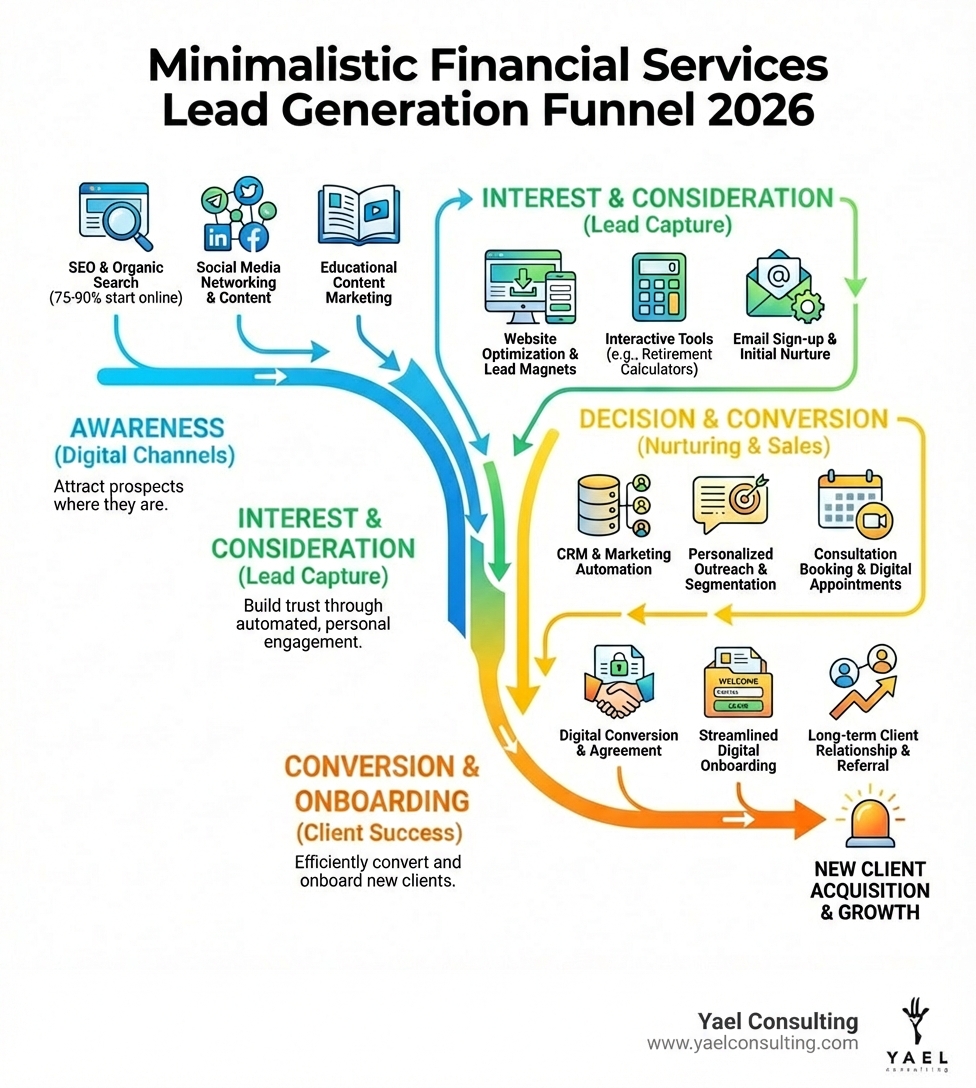
The Foundation: Modern vs. Outdated Lead Generation Methods
The financial services landscape is constantly evolving, and so too must our approach to attracting new clients. What worked a decade ago simply won’t cut it today. We’ve moved from an era of interruption-based marketing to one of permission and value. Prospects are savvier, more informed, and expect a different kind of engagement.

Effective Modern Strategies
Today, the most effective lead generation for financial services strategies accept a digital-first approach. This means prioritizing our online presence, creating valuable content, and leveraging data to connect with the right people at the right time. Our website becomes our storefront, our social media channels our networking events, and our content our educational seminars.
Modern strategies focus on:
- Content Marketing: We know that educational content makes consumers 131% more likely to buy from a brand. By providing valuable insights, guides, and articles, we position ourselves as trusted experts.
- SEO (Search Engine Optimization): Ensuring our digital content is easily found by potential clients searching for financial advice online.
- Social Media: Platforms like LinkedIn and Facebook are no longer just for personal updates; they are powerful tools for professional networking and client acquisition. In fact, 41% of advisors have landed clients through social media.
- Referral Networks: While traditional, modern referral strategies are improved by digital tools and the understanding that referred clients have a lifetime value that is 16% higher than non-referred clients.
- Personalization: Tailoring our messages and services to individual needs, which can help companies grow revenues 10% to 15%.
- Data-Driven Targeting: Utilizing analytics and AI to understand our ideal client profiles and target our efforts more precisely. Data-driven and AI-powered tools can help increase lead generation by 50% or more.
Growth-oriented financial advisors with a defined marketing strategy onboard significantly more new clients each year, a testament to the power of these modern approaches.
Why Traditional Tactics Are Failing
Let’s be honest: some old habits die hard. But when it comes to lead generation for financial services, clinging to outdated methods is a recipe for frustration and stagnation.
- Cold Calling: Imagine receiving an unsolicited call during dinner from someone trying to sell you financial products. Not exactly a trust-building exercise, is it? Cold calling has a notoriously low success rate and can lead to burnout for advisors. It’s often perceived as intrusive and rarely yields high-quality leads in today’s market.
- Direct Mail: While it still has niche applications, generic direct mail often ends up in the “junk mail” pile. Its conversion rate is low, and it struggles to stand out in a world saturated with digital communication.
- Generic Newspaper Ads: Unless placed in highly specialized, niche publications targeting a very specific audience, broad newspaper and magazine ads are largely ineffective. They lack the targeting capabilities of digital advertising and offer little opportunity for personalized engagement.
These traditional tactics are failing because they prioritize interruption over value, quantity over quality, and a one-size-fits-all approach over personalization. Prospects today expect to be educated, engaged, and understood, not simply sold to.
Dominating the Digital Arena: Key Online Strategies
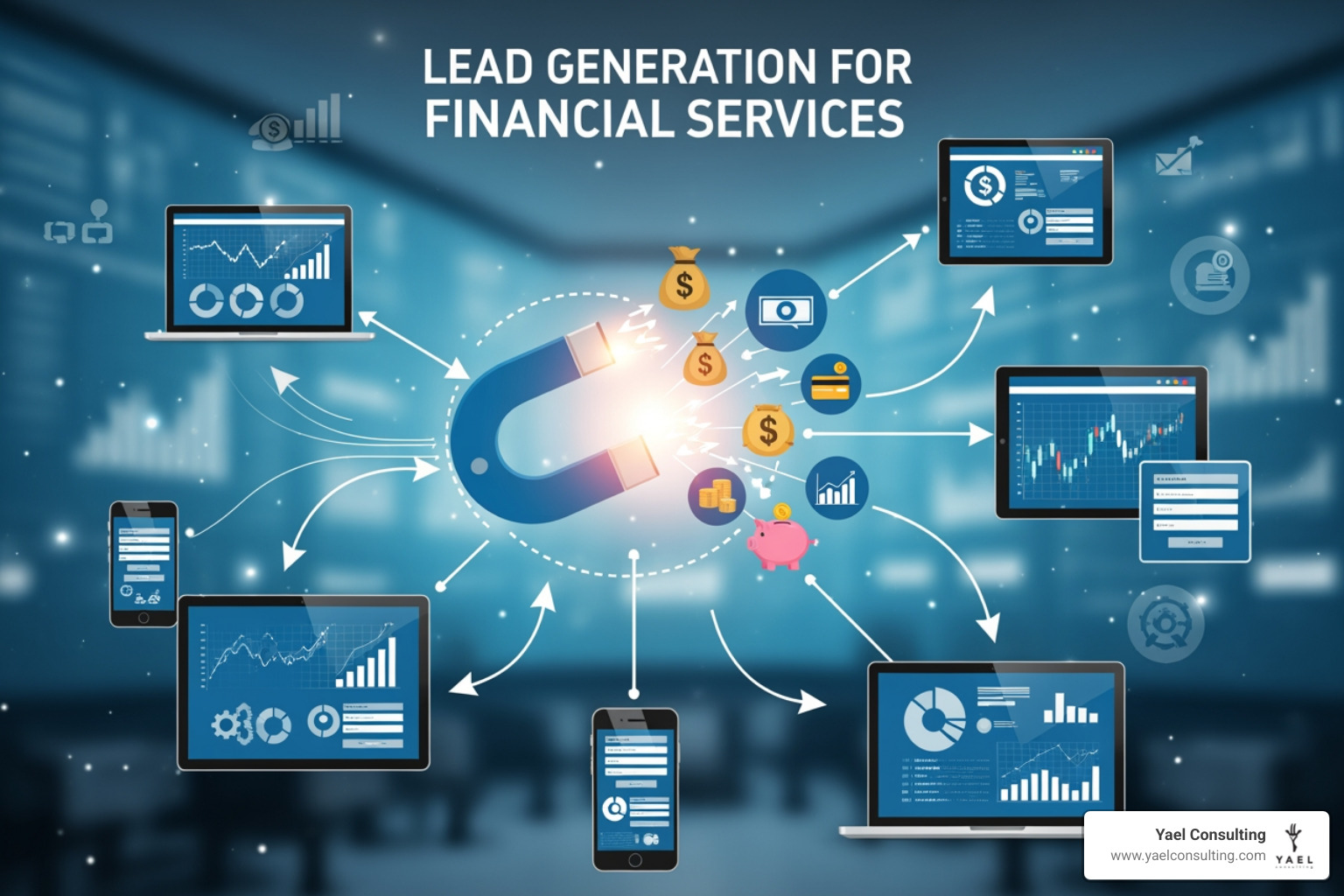
Our online presence is paramount. Between 75% and 90% of financial services searches now start online, meaning if we’re not visible and engaging there, we’re missing out on a vast pool of potential clients. This section will explore how we can effectively leverage digital channels for lead generation for financial services.
Your Digital Storefront: Website & Local SEO
Think of our website as our digital storefront. It’s often the first impression a potential client has of us, and it needs to be professional, informative, and user-friendly. Prospects will visit our site to validate opinions and learn about our offerings.
- Professional Website Design: A clean, professional design that clearly communicates our value proposition is essential. It should be easy to steer and reflect our brand’s credibility.
- Mobile-Friendliness: With more than half of website traffic being mobile, our site absolutely must be mobile-responsive. Google has prioritized mobile-ready websites since 2018 with its mobile-first indexing, so this isn’t just about user experience—it’s about search visibility too.
- Local SEO: For financial advisors serving clients in specific areas like New York or Los Angeles, optimizing for local search is crucial. This involves creating a Google Business Profile (and keeping it updated!), gathering client testimonials, and incorporating location-specific keywords into our content. Local SEO best practices also include sharing our profile link on social media and improving our website’s internal linking structure. When people search for “financial advisor near me,” we want to be at the top of that list.
- Client Testimonials: Social proof is powerful. Displaying positive client reviews and testimonials on our website can significantly build trust and credibility.
Attracting Prospects with Content Marketing
Content marketing is about providing value. It’s how we establish ourselves as thought leaders and build trust long before a prospect ever picks up the phone.
- Educational Content: This is our bread and butter. We can create informative blog posts, detailed guides, white papers, and case studies that address the common questions and concerns of our target audience. A 2022 study found that educational content makes consumers 131% more likely to buy from a brand. For financial services, this could mean articles on retirement planning, investment strategies, or tax-efficient savings.
- Blogging: Consistent blogging on relevant topics not only educates our audience but also significantly boosts our SEO. Organizations with blogs gain 97% more links to their business site, which improves our search ranking.
- Lead Magnets: Offer valuable resources for free in exchange for contact information. This could be a “Retirement Planning Checklist,” an “Investment Guide for Young Professionals,” or a “Tax Savings Ebook.” These lead magnets capture contact details, allowing us to nurture prospects further.
- Video Marketing: Video content is incredibly engaging. Ninety-three percent of marketers today say they’ve received a positive return on investment by using video marketing. Short explainer videos, Q&A sessions, or market updates can be shared across our website and social media channels.
- Building Trust: By consistently providing unbiased, high-quality educational content, we build authority and trustworthiness (what SEO experts call E-A-T: Expertise, Authoritativeness, Trustworthiness). This is particularly vital in financial services, where trust is the ultimate currency.
The Power of Social Media and Professional Networking
Social media, when used strategically, is a goldmine for lead generation for financial services. With seventy percent of Americans using social media, our potential clients are definitely there.
- Professional Networking: LinkedIn is arguably the most powerful platform for B2B financial services lead generation. It’s home to over 250 million users in senior and C-level executive positions. We can use LinkedIn to identify ideal prospects, connect with them, and share valuable insights. Four in 10 advisors have added new clients through social media, with LinkedIn and Facebook being the most successful channels.
- Building Authority and Thought Leadership: Regularly sharing insightful articles, commenting on industry discussions, and even hosting live Q&A sessions can establish us as authorities in our niche.
- Client Acquisition: While direct selling is often frowned upon, social media provides an excellent avenue for soft introductions and relationship building. Eighty percent of financial advisors leverage social media to get new clients, gaining an average asset of approximately $5 million. This often starts with engaging content that sparks interest and leads to a more direct conversation.
- Other Platforms: While LinkedIn is king for B2B, Facebook can be effective for local community engagement and events. Twitter users tend to be affluent, educated, and techy, making it another platform to consider for content sharing and engagement.
Advanced Lead Generation for Financial Services: Data, Personalization, and Automation
To truly excel in lead generation for financial services, we need to move beyond basic digital presence and accept the power of data, personalization, and automation. This is where we can significantly increase our efficiency and conversion rates.
Leveraging Data and AI for Hyper-Targeting
Data and AI are no longer futuristic concepts; they are essential tools for modern lead generation. Data-driven and AI-powered tools can help increase lead generation by 50% or more by allowing us to understand and target our prospects with unprecedented precision.
- Predictive Analytics: AI can analyze vast amounts of data to predict which prospects are most likely to convert, helping us focus our resources effectively.
- Lookalike Audiences: Based on our existing high-value clients, we can use AI to find new prospects who share similar characteristics, increasing the likelihood of successful engagement.
- Life Event Triggers: AI-powered platforms can track significant life and career events—like a new job, a promotion, or a major liquidity event—that often signal a need for financial advice. Timing our outreach with these triggers means engaging prospects when they are most receptive.
- Lead Scoring: We can assign scores to leads based on their engagement, demographics, and fit with our ideal client profile. This helps us prioritize our efforts and focus on the “warmest” leads.
- Increased Lead Generation: By combining these strategies, we ensure our campaigns are not just reaching more people, but reaching the right people at the right time, leading to a substantial increase in qualified leads. AI-powered data tools, combined with human quality assurance, can verify each lead for role accuracy, financial relevance, and business fit.
The Art of Personalization and Segmentation for Financial Services Lead Generation
In an industry built on trust, generic messages fall flat. Personalization and segmentation are key to making our outreach resonate. We know that personalization can help companies grow revenues 10% to 15%.
- Tailoring Messages: Instead of a blanket email, we can craft messages that speak directly to a prospect’s specific financial situation, goals, or concerns. This requires understanding their needs before we even contact them.
- Audience Personas: We develop detailed profiles of our ideal clients, including their demographics, financial goals, pain points, and preferred communication channels.
- Segmentation Benefits: Financial advisors that segment clients have greater growth in assets under management than those that don’t. By segmenting our audience, we can deliver highly relevant content and solutions. For example, we wouldn’t send retirement planning information to a young professional just starting their career, nor would we send information about college savings to a retiree.
- Potential Client Segments:
- Pre-retirees: Focused on retirement income, healthcare costs, estate planning.
- Young Professionals: Concerned with student loan debt, first-time home buying, early-stage investing.
- Business Owners: Seeking business succession planning, tax strategies, wealth management for business assets.
- High-Net-Worth Individuals: Interested in complex investment strategies, philanthropic giving, multi-generational wealth transfer.
- Families with Special Needs: Requiring specialized financial planning for long-term care and support.
- Why it Matters: Despite nearly half of clients desiring more personalization, only 4 in 10 advisors create custom content. This is a huge missed opportunity. Segmentation allows us to work smarter, not harder, by improving our efficiency and profitability.
Automating for Efficiency: Nurturing and Conversion
Once we’ve generated leads, the next step is nurturing them through their decision-making journey. This is where automation becomes our best friend.
- CRM Platforms: A robust Customer Relationship Management (CRM) system is non-negotiable. It helps us track every interaction, manage pipelines, and ensure no lead falls through the cracks.
- Email Drip Campaigns: We can set up automated email sequences that deliver valuable content to prospects over time, keeping us top-of-mind. These drip sequences can be custom to specific segments, providing relevant information at each stage of their journey.
- Automated Follow-ups: Beyond emails, automation can help us manage follow-up tasks, reminding us to make calls or send personalized messages when appropriate. Some tools can even assist with drafting communications.
- Nurture Funnels: This involves a series of touchpoints designed to build trust and educate prospects, gradually moving them closer to becoming clients. For instance, after a prospect downloads an ebook, they might enter an email sequence offering more in-depth content or inviting them to a webinar.
Automating these processes frees up our time to focus on what we do best: building relationships and providing expert financial advice.
From Lead to Client: Conversion, Compliance, and Expansion
Generating leads is only half the battle; converting them into loyal clients is the ultimate goal. This involves a delicate blend of strategic follow-up, trust-building, and a keen eye on compliance.
Effective Strategies for Converting Financial Services Leads
Converting a lead into a client in financial services often involves a longer sales cycle due to the nature of trust and significant financial decisions.
- Strategic Follow-up: Consistency is key, but so is strategy. We follow up with a combination of phone calls, emails, and personalized text messages. The goal isn’t to badger them, but to provide continued value and answer any questions they may have.
- Demonstrating Understanding & Active Listening: Before we even think about offering solutions, we must listen. Prospects are put off if advisors jump into talking about services before truly understanding their unique needs and concerns. Active listening builds rapport and trust, showing them we care about their financial well-being, not just their assets.
- Building Rapport: Financial decisions are deeply personal. We focus on building a genuine connection, showing empathy, and establishing ourselves as a trusted advisor.
- Lead Qualification: Not every lead is the right fit. We qualify leads to ensure they align with our services and ideal client profile. It’s better to focus on high-quality leads than to chase every single one. Aiming for a conversion rate of 10% to 20% is a healthy target, meaning we need to generate between 100 and 150 leads each year to onboard 10 to 15 new clients.
- Setting Appointments: The ultimate goal of nurturing is to secure an initial consultation or meeting. We make this process as easy as possible for the prospect, offering flexible scheduling options.
Building a Human-Centric Growth Engine
Even in our digital world, the human element remains paramount in financial services. Relationships drive growth, and referrals are the gold standard.
- Referral Networks: We know that 92% of people trust reviews from friends and family more than other marketing efforts. Referred clients also generate a lifetime value that is 16% higher. We actively cultivate referral programs and encourage our satisfied clients to spread the word. Sometimes, clients have busy lives and may not think to refer unless prompted. We can gently remind them that we’re looking to help new clients and would love to assist those important to them.
- Networking with Professional Partners: Building relationships with complementary professionals—such as CPAs, attorneys, and real estate brokers—can create a powerful reciprocal referral network. They often encounter clients who need financial advice, and vice versa.
- Offline Seminars & Workshops: While digital is dominant, well-executed in-person or virtual seminars can still be highly effective. These educational events allow us to demonstrate expertise, answer questions, and build trust in a less sales-driven environment.
- Community Involvement: Sponsoring local events or participating in community initiatives can build brand awareness and demonstrate our commitment to the communities we serve, such as those in New York or Los Angeles. This local engagement can lead to organic leads and strengthen our reputation.
Ensuring Lead Quality and Regulatory Compliance
In financial services, trust and regulation go hand-in-hand. We must ensure our lead generation efforts are not only effective but also compliant and ethical.
- Data Verification: Quality over quantity is our mantra. We use AI-powered data tools and human quality assurance to verify each lead for role accuracy, financial relevance, and business fit. This prevents wasting time on unqualified prospects and ensures our outreach is targeted.
- FINRA Rules & Privacy Regulations: The financial services industry is heavily regulated. All our lead generation activities, from data collection to communication, must align with relevant financial industry standards and privacy regulations (such as FINRA rules in the USA). This protects both our firm and our clients.
- Account-Based Marketing: For B2B financial services, an account-based, multi-touch strategy is highly effective. We identify specific high-value companies and individuals (like CFOs or business owners) and tailor our outreach to them across multiple channels.
- Expanding Your Reach for Remote Clients: Don’t limit ourselves geographically. A significant portion of prospects (60% in one survey) are willing to work with an advisor remotely. This means we can expand our reach beyond our immediate vicinity, serving clients across the USA from New York to Los Angeles, or even in Israel, leveraging digital communication tools.
Frequently Asked Questions about Financial Services Lead Generation
Navigating lead generation for financial services can bring up a lot of questions. Here, we address some of the most common ones we hear.
What is the difference between lead generation and prospecting?
This is a great question, and the terms are often used interchangeably, but they have distinct meanings:
- Lead Generation: This is an inbound marketing process focused on attracting interested individuals to our business. We create content, optimize our website, run ads, and engage on social media to entice potential clients to raise their hand and express interest in our services. They come to us.
- Prospecting: This is an outbound sales activity where we actively seek out potential clients. We identify individuals or companies that fit our ideal client profile and then proactively reach out to them, often through cold calls, emails, or LinkedIn messages. We go to them.
Both are essential, but lead generation typically yields warmer, more qualified leads as the prospect has already shown some level of interest.
How much does a lead cost in the finance industry?
The average cost for a lead in the finance industry is $160. However, this can vary wildly depending on the channel, targeting, and quality of the lead. For example, financial services keywords are among the most expensive in paid advertising, sometimes running as high as $50 or more per click on platforms like Google Ads.
While this might seem high, a high-quality lead that converts into a long-term client with significant assets under management can easily justify the initial investment. The key is to focus on the quality and conversion potential of the lead, not just the raw cost.
How quickly can I see ROI from a lead generation campaign?
Most firms start seeing qualified leads within 30–60 days of launching a well-structured lead generation campaign. However, it’s crucial to remember that financial services often have longer trust-building cycles. While initial leads can appear quickly, the full Return on Investment (ROI) – meaning actual client conversion and asset acquisition – may take longer to materialize as relationships mature.
Our goal is not just quick leads, but sustainable client relationships. A defined marketing strategy, combining immediate lead capture with long-term nurturing, is the best path to consistent ROI.
Conclusion: Building Your Sustainable Lead Generation Machine
Lead generation for financial services is a dynamic, multi-faceted process that demands a strategic, digital-first approach. We’ve seen why outdated methods no longer suffice and how embracing modern strategies—from optimizing our digital storefront to leveraging data, AI, and personalization—is crucial for sustainable growth.
The path to success involves:
- A robust, mobile-friendly website that serves as our digital hub.
- A consistent stream of valuable, educational content that builds trust and expertise.
- Strategic engagement on social media, especially professional platforms like LinkedIn.
- The intelligent use of data and AI for hyper-targeting and personalization.
- Automated nurturing sequences that keep prospects engaged until they’re ready to convert.
- A human-centric approach to conversion, emphasizing active listening and building genuine rapport.
- Diligent adherence to lead quality and regulatory compliance.
This isn’t a one-and-done task; it’s a continuous process of learning, adapting, and refining. By implementing a multi-channel strategy and making data-driven decisions, we can build a powerful lead generation machine that consistently attracts high-quality prospects and fuels our firm’s growth.
If you’re ready to take your lead generation for financial services to the next level, especially through optimized paid advertising, we’re here to help. At Yael Consulting, we are a boutique Google Ads agency with 15+ years of expertise. We specialize in driving significant sales and profit growth for lead generation businesses in the USA and Israel, including key markets like New York and Los Angeles. We offer one-client-per-market exclusivity, proprietary technology, and direct CEO involvement, ensuring you get unparalleled focus and results.
Ready to see how we can transform your lead generation? We invite you to try our free, actionable 15-minute Google Ads analysis—we guarantee you’ll walk away with valuable insights. Find More info about AdWords management services here.


Ex Special-Ops commander turned Google Ads expert and online marketing consultant. In minutes I will show you exactly how I will improve your profits (no fluff), backed by a 30-day guarantee. Feel free to contact me.
Lior is an expert in online marketing, strategy, operations, and technology. In his experience with diverse industries, military, and small and fortune-500 companies, he personally increased sales and productivity, built reporting platforms, and cut wasteful costs, all to ultimately hit company goals.
Lior has passion for learning, curiosity, and genuine commitment to get results. He enjoys working with high-performance and results-driven teams and performs best in environments that strive for excellence.
Specialties: Search Engine Marketing (SEM, PPC, Paid Search), Google Adwords, Bing-Yahoo Marketing, Landing Page Optimization. Data, ROI, and LTV Analytics, Report and Process Automation.