
Google Shopping Ads: How to Choose a Specialist Agency for Your Products

Why Google Shopping Ads Demand Specialized Expertise
A Google Shopping Ads agency manages product listing campaigns that appear at the top of Google search results with images, prices, and merchant details. These agencies optimize your product feed, structure campaigns for profitability, handle bidding strategies, and test continuously to maximize return on ad spend (ROAS). They eliminate wasted budget on irrelevant clicks while scaling high-performing products.
What to look for in a Shopping Ads agency:
- Feed mastery – Optimizes product titles, images, and attributes for maximum visibility.
- SKU-level tracking – Monitors individual product performance to prioritize profitable items.
- Smart bidding – Uses profit margin data, not just revenue, to allocate budget.
- Google Premier Partner status – Proven expertise managing Shopping campaigns.
- Transparent reporting – Custom dashboards showing ROAS, CPA, and conversion data in real-time.
- Industry experience – Case studies and results from businesses like yours.
According to recent PPC statistics, Google Shopping ads capture 85.3% of all retail paid search clicks and can deliver 4:1 to 10:1 ROAS when managed properly. They work differently than text ads—there’s no keyword targeting. Instead, Google matches your products to searches based on your product feed data in Google Merchant Center.
Most e-commerce businesses waste thousands on Shopping campaigns because they treat them like standard Search ads. They upload a basic product feed, let Google’s automation run wild, and wonder why they’re bleeding money on clicks that don’t convert. The reality is that Shopping campaigns are feed-first, structure-second, and automation-last. Get those elements wrong, and you’re funding your competitors’ growth.
The stakes are high. A poorly optimized feed tanks your visibility. Vague product groupings waste budget on low-margin items. Ignoring SKU-level data means you’re bidding the same on a $10 product and a $500 product. If you’re not segmenting by profit margin or implementing dynamic remarketing, you’re leaving money on the table daily.
I’m Lior Krolewicz, and I’ve spent 15 years building and scaling Google Ads systems—from my time leading online marketing at a top advertising firm to founding a Google Shopping Ads agency that uses proprietary technology (IBEX) to diagnose and fix accounts in days, not weeks. I’ve personally directed millions in ad spend across diverse industries and know what separates profitable Shopping campaigns from expensive experiments.
The Foundations: What Are Google Shopping Ads?
Google Shopping Ads are a powerful tool for e-commerce businesses, acting as a visual storefront within Google’s ecosystem. They put your products in front of customers who are actively searching to buy, boosting brand visibility and customer acquisition. For most retailers, Google’s ad network is the sweet spot for PPC shopping ads, with one study showing that 85.3% of all those clicks happen on Google Shopping ads. This makes them a leading traffic source that can give you a competitive edge.
How They Differ from Standard Search Ads
The main difference between Google Shopping Ads and standard Google Search Ads is their format and targeting. Standard Search Ads are text-based and rely on keywords you bid on. They include a headline, description, and URL.
Google Shopping Ads are highly visual, displaying a product image, title, price, and store name directly in search results. This rich format gives customers more information upfront, increasing lead quality by ensuring that by the time someone clicks, they already know what the product is and how much it costs.
Crucially, Google Shopping has zero keyword targeting capabilities. Instead of keywords, campaigns are powered by your product feed in the Google Merchant Center. Google uses the attributes in this feed (like title, description, and category) to match your products to relevant searches. This means optimizing your product data, not keyword lists, is paramount for success.
Where Your Ads Can Appear
Google Shopping Ads have extensive reach across Google’s properties. Your ads can appear in several prominent locations:
- The Shopping tab on Google Search: A dedicated comparison engine where users browse and filter products.
- Next to search results on Google Search: Often at the top or on the side of the search results page, above text ads.
- Google Images: When users search for product-related images.
- Google Search Partner websites: A network of sites that partner with Google to show ads.
- The Google Display Network: Including platforms like YouTube and Gmail for broader reach and remarketing.
This broad placement ensures your products are visible where customers are actively looking. Google Shopping campaigns are available in these countries globally, including the USA and Israel, allowing businesses to reach local and international customers.
The Different Types of Shopping Ads
Google offers different Shopping Ad types for specific goals:
| Ad Type | Format | Use Case | Cost Model |
|---|---|---|---|
| Product Shopping Ads | Single product listing with image, title, price, store name | Standard product promotion, driving traffic to specific product pages, directly converting sales | Cost-Per-Click (CPC): Charged when a user clicks on your ad |
| Showcase Shopping Ads | Group of related products (e.g., “summer dresses,” “men’s shoes”) | Allowing users to compare multiple products from your store, brand findy, broader product categories | Cost-Per-Engagement (CPE): Charged when a user expands the ad for 10+ seconds or clicks/taps on it |
| Local Catalog Ads | Showcase local inventory, promotions, and store information | Driving foot traffic to physical stores, promoting local deals, highlighting in-store availability | Cost-Per-Engagement (CPE): Charged when a user expands the ad for 10+ seconds or clicks/taps on it |
Product attributes are the foundation for all these ad types. The more detailed and accurate your product feed, the better Google can match your products to relevant searches.
What Industries Are Best Suited for Shopping Ads?
While nearly any business selling physical products online can benefit, Google Shopping Ads are especially effective for industries with a strong visual component. These include:
- Retail: Clothing, accessories, footwear, jewelry
- Electronics: Computers, smartphones, cameras
- Home Goods: Furniture, decor, kitchenware
- Sporting Goods: Equipment, apparel, outdoor gear
- Health & Beauty: Cosmetics, skincare, supplements
- Automotive Parts: Specific components and accessories
Essentially, any e-commerce business with a catalog of physical products, whether B2C or B2B, can use Shopping Ads to reach high-intent buyers. If your customers search for specific items and compare options, Shopping Ads are a must-have.
Why Your E-commerce Business Needs a Specialist Agency
Managing Google Shopping Ads effectively is more intricate than it appears. While basic setup is straightforward, maximizing your return on investment (ROI) requires deep expertise. This is where a specialist Google Shopping Ads agency becomes indispensable. We provide a competitive advantage, save you time, and bring technical expertise that can transform your ad spend into a revenue engine. Without specialized help, you risk wasted ad spend and missed opportunities.

The Central Role of Google Merchant Center
At the heart of every successful Google Shopping campaign is the Google Merchant Center. This is where your product catalog lives, and it’s the single source of truth for the data Google uses to create your ads. Your product data feed contains crucial attributes for each item, such as ID, title, description, price, and availability. Google relies on this to match your products to relevant user queries.
However, simply uploading a feed isn’t enough. The Merchant Center has stringent policies. If your feed is inaccurate or violates policies, your products won’t show up, or your account could be suspended. An agency ensures your feed is compliant, updated, and optimized to prevent these issues.
Navigating Complex Bidding and Budgeting Strategies
Unlike Search Ads, Google Shopping requires a different approach to bidding. Agencies steer these complexities to ensure your budget is spent profitably. We consider various strategies:
- Manual CPC (Cost-Per-Click): Offers maximum control, allowing specific bids for products or groups.
- Target ROAS (Return On Ad Spend): An automated strategy where you set a target ROAS, and Google adjusts bids to achieve it.
- Maximize Clicks: Aims to get as many clicks as possible within your budget.
- Smart Bidding: A suite of automated strategies that use machine learning to optimize for conversions.
A specialist agency goes beyond basic settings. We implement sophisticated strategies like profit margin bidding, adjusting bids based on profitability, not just revenue. We also account for seasonal adjustments and market trends to ensure your bids are always competitive.
Avoiding Common, Costly Mistakes
Businesses often make costly mistakes with Google Shopping Ads. A specialist agency helps you avoid these pitfalls:
- Poor Feed Quality: An unoptimized or inaccurate feed is the number one killer of Shopping campaigns, leading to irrelevant ads and low click-through rates.
- Inaccurate Pricing/Availability: If your feed data doesn’t match your website, your ads will be disapproved, leading to lost sales.
- No Negative Keywords: While Shopping Ads don’t use positive keywords, negative keywords are critical to prevent showing ads for irrelevant searches (e.g., excluding “repair” if you only sell new products).
- Vague Targeting: Broad targeting can show ads to audiences unlikely to convert.
- Ignoring Mobile Performance: Neglecting mobile-specific bid adjustments is costly, as a significant portion of traffic comes from mobile.
- Neglecting Campaign Structure: Dumping all products into one ad group makes optimization impossible. We create logical structures for granular control.
Irrelevant clicks don’t turn into sales. We focus on attracting qualified traffic, ensuring every click has a strong potential to convert and eliminating wasted spend.
Core Services That a Top Google Shopping Ads Agency Provides
A top Google Shopping Ads agency offers a comprehensive suite of services to manage, optimize, and scale your campaigns for maximum profitability. This involves strategic planning, continuous performance optimization, and in-depth data analysis.
Mastering the Product Feed for Maximum Visibility
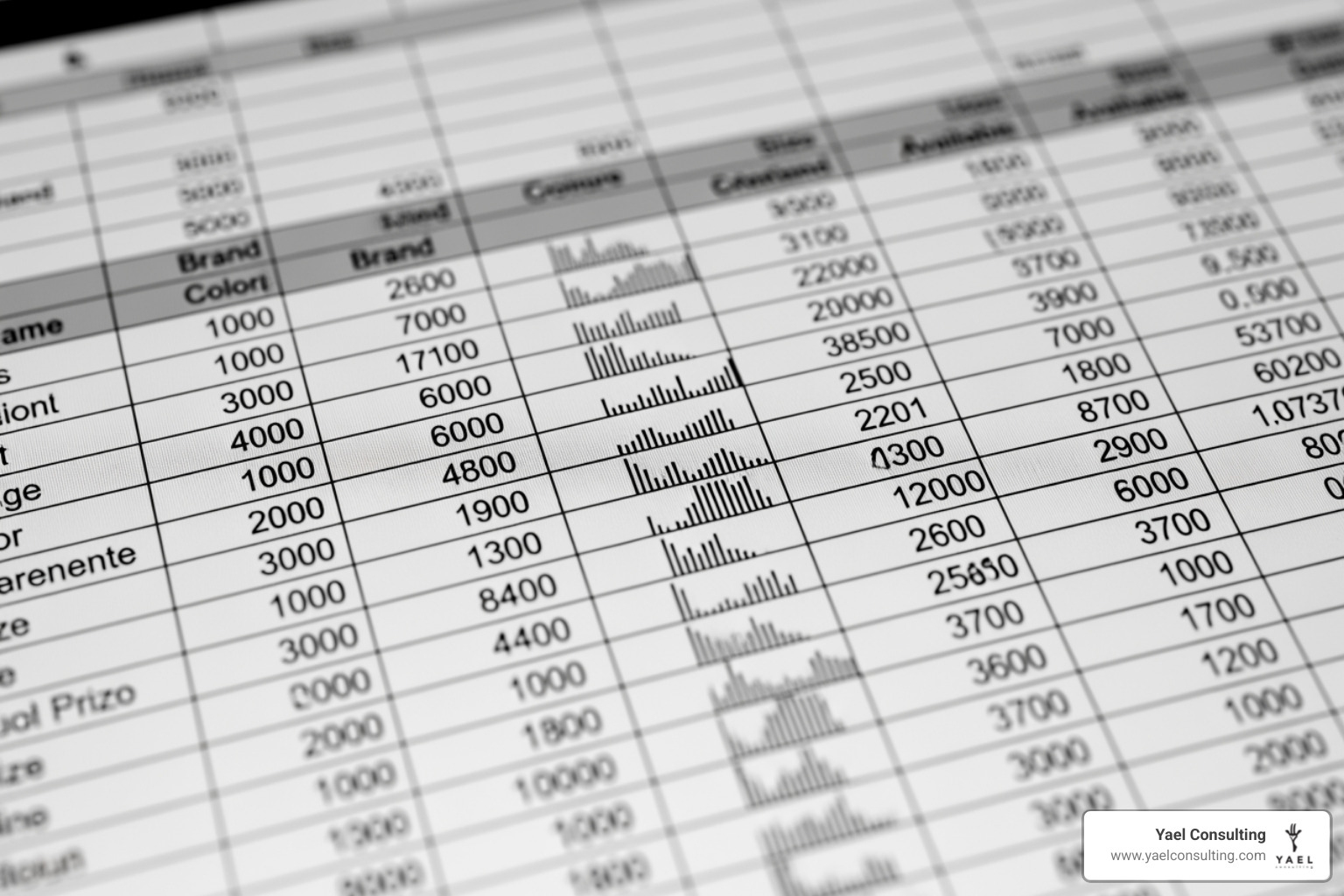
The product feed is the engine of your Google Shopping campaigns, and optimizing it is a critical service. We focus on several key areas:
- Product Title Optimization: We craft titles with important keywords and attributes (brand, color, size) at the beginning to maximize relevance.
- High-Quality Images: We ensure your images meet Google’s specifications and stand out from competitors.
- Detailed Descriptions: Rich descriptions provide valuable context to Google for better ad matching.
- Custom Labels: We use custom labels for flexible product groupings based on profit margin, seasonality, or best-sellers, allowing for granular bidding.
- Google Product Taxonomy: Correctly categorizing products using the Google Product Taxonomy is vital for Google to understand what you’re selling.
- Supplemental Feeds and Feed Rules: We use these to add or override information and automate optimizations without altering your source data.
Advanced Audience Targeting and Retargeting
Reaching the right people at the right time is crucial. An agency employs advanced audience strategies to maximize ad spend:
- Remarketing Lists: We create audiences of users who have interacted with your site but haven’t converted.
- Similar Audiences: Google finds new potential customers who share characteristics with your existing remarketing lists.
- Customer Match: You can upload customer email lists for highly targeted advertising.
- Dynamic Remarketing: This powerful strategy shows past visitors ads for the exact products they viewed. When someone visits your site, a pixel drops a cookie onto their browser that tracks them, allowing us to serve highly personalized ads to convert cart abandoners or re-engage past purchasers.
We segment these audiences based on their stage in the buying journey and tailor messages and bids accordingly.
SKU-Level Bidding, Tracking, and Profitability Analysis
For true profitability, a specialist agency dives deep into your product data. We implement SKU-level strategies:
- SKU-Level Performance: We track the performance of every individual product (Stock Keeping Unit) to see which products drive sales and which drain your budget.
- Granular Control: By understanding individual product performance, we can implement product groupings or Single Product Ad Groups (SPAGs) for granular control over bids.
- Profitability Data: We integrate your product profit margins into our bidding strategies to optimize for actual profit, not just clicks or conversions.
- Data-Driven Decisions: This granular data allows us to decide which products to push, optimize, or pause, ensuring your ad spend contributes to your bottom line.
Continuous A/B Testing and Campaign Optimization
The digital advertising landscape is always evolving. A top agency employs continuous A/B testing and optimization:
- Ad Copy & Image Testing: We test different product titles, descriptions, and images to find what resonates best and drives higher click-through rates.
- Bidding Strategy Tests: We experiment with different bidding strategies to find the optimal approach for various product categories.
- Landing Page Recommendations: We provide recommendations to optimize product pages for conversion.
- Device Bid Adjustments: We analyze performance across desktop, mobile, and tablet devices and adjust bids to maximize conversions.
This iterative process of testing, analyzing, and refining ensures your campaigns are always performing at their peak.
How to Choose the Right Agency and Measure Success
Choosing the right Google Shopping Ads agency is a critical decision for your e-commerce success. It’s about finding a strategic partner with expertise, transparency, and a clear path to measurable results.
Key Questions to Ask a Potential Google Shopping Ads Agency
When evaluating partners, ask these crucial questions to ensure they align with your business goals:
- What is your approach to product feed optimization? (Look for detailed strategies beyond basic setup).
- How do you structure Shopping campaigns? (Inquire about segmentation and profit-based strategies).
- How do you measure and report on ROI? (Expect clear KPIs like ROAS and CPA).
- What experience do you have in my industry? (Industry-specific knowledge can be a plus).
- Can you share case studies or client testimonials? (Look for quantifiable results).
- What is your fee structure? (Understand pricing models and what’s included).
- How do you handle communication and collaboration? (Ensure a good fit for partnership).
Evaluating Expertise, Technology, and Reporting
Beyond questions, look for tangible signs of a top-tier agency:
- Google Premier Partner Status: This certification is awarded to the top 3% of Google Ads agencies, signifying a proven track record of success.
- Case Studies and Client Testimonials: Verifiable results and positive feedback are strong indicators of an agency’s capabilities.
- Proprietary Technology: Leading agencies, including ours, leverage proprietary technology like our IBEX system to diagnose and fix accounts quickly, offering insights generic tools can’t provide.
- Direct Expert Involvement: Look for agencies where senior talent or the CEO is directly involved in strategy. Our model, for instance, often includes one-client-per-market exclusivity and direct CEO involvement, ensuring you receive unparalleled attention.
- Custom Dashboards and Reporting: Expect more than raw data. A specialist agency provides custom dashboards with real-time tracking and strategic insights. Many leading agencies, including ours, offer a free, actionable 15-minute Google Ads analysis, providing guaranteed value from the start.
The Onboarding Process and What to Expect
A structured onboarding process is a hallmark of a professional agency. Here’s what to expect:
- Account Audit: A deep dive into your existing account and feed to find opportunities.
- Goal Setting: Collaborative discussions to define clear, measurable goals (e.g., target ROAS, CPA).
- Strategy Presentation: The agency presents a custom strategy outlining campaign structure, bidding, and feed optimization.
- Campaign Buildout/Restructuring: Implementation of the agreed-upon strategy.
- Conversion Tracking Setup: Ensuring accurate tracking to measure sales and leads.
- Regular Communication: Scheduled meetings to discuss performance and plan next steps.
- Performance Reviews: Ongoing analysis and reporting to review results against goals and adjust strategies.
This systematic approach ensures a smooth transition and a clear roadmap for success.
Frequently Asked Questions about Google Shopping Agencies
How much does a Google Shopping Ads agency cost?
The cost for a Google Shopping Ads agency varies but typically follows a few models:
- Percentage of Ad Spend: The agency charges a percentage (e.g., 10-20%) of your monthly ad budget.
- Flat Monthly Retainer: A fixed fee charged each month, often preferred for smaller, consistent budgets.
- Hybrid Model: A combination of a flat retainer and a percentage of ad spend or performance bonuses.
Fees can range from $1,500 to over $10,000 per month, depending on the scope of work, ad budget, and agency expertise.
How long does it take to see results from Google Shopping Ads?
While initial traffic appears within days, significant results take time. Google Ads campaigns need a “learning phase” to gather data and optimize.
- Initial Results (Days to 1 Month): You’ll see impressions and clicks, but performance may be inconsistent as Google’s algorithms learn.
- Optimization Phase (1-3 Months): This is a crucial period for data collection and refinement. Performance often stabilizes and improves significantly during this “Core” phase.
- Scaling and Domination (3+ Months): Once campaigns are optimized, they can be scaled for consistent growth and high-level ROI.
Allow sufficient time for strategies to take hold and for the agency to gather enough data for meaningful optimization.
What kind of reporting can I expect?
Transparency is key. Expect comprehensive, regular reports demonstrating campaign performance and ROI. This typically includes:
- Key Performance Indicators (KPIs): Metrics like Return On Ad Spend (ROAS), Cost Per Acquisition (CPA), conversion value, clicks, and impressions.
- Custom Dashboards: Many top agencies provide access to custom dashboards for real-time data visualization.
- Strategic Insights: Reports should include expert analysis, explaining what the data means and outlining strategic recommendations.
- Regular Reviews: Scheduled calls to walk through reports, discuss progress, and answer questions.
The goal of reporting is to provide actionable intelligence that informs your business decisions.
Conclusion: Partnering for E-commerce Growth
Navigating the complexities of Google Shopping Ads can be a daunting task for any e-commerce business. From meticulous product feed optimization to advanced bidding strategies and continuous A/B testing, the demands are high, but so are the potential rewards. By partnering with a specialist Google Shopping Ads agency, you’re not just outsourcing a task; you’re gaining a strategic partner dedicated to driving measurable growth and maximizing your return on investment.
A top-tier agency brings unparalleled expertise, proprietary technology, and a data-driven approach to ensure your products stand out, attract high-intent buyers, and convert efficiently. They help you avoid common pitfalls, capitalize on every opportunity, and scale your business effectively, reaching both local and global customers.
To get a customized, data-driven strategy for your products, explore expert Google Ads consulting services.


Ex Special-Ops commander turned Google Ads expert and online marketing consultant. In minutes I will show you exactly how I will improve your profits (no fluff), backed by a 30-day guarantee. Feel free to contact me.
Lior is an expert in online marketing, strategy, operations, and technology. In his experience with diverse industries, military, and small and fortune-500 companies, he personally increased sales and productivity, built reporting platforms, and cut wasteful costs, all to ultimately hit company goals.
Lior has passion for learning, curiosity, and genuine commitment to get results. He enjoys working with high-performance and results-driven teams and performs best in environments that strive for excellence.
Specialties: Search Engine Marketing (SEM, PPC, Paid Search), Google Adwords, Bing-Yahoo Marketing, Landing Page Optimization. Data, ROI, and LTV Analytics, Report and Process Automation.