
Why Understanding Google Ads Agency Pricing Matters
Google Ads agency pricing typically falls into four main models: flat monthly fees ($500-$5,000+), percentage of ad spend (10-20% of your budget), performance-based pricing (pay per lead or conversion), or hybrid combinations of these approaches. Your choice depends on your budget stability, growth goals, and campaign complexity.
Here’s how the main pricing models compare:
| Pricing Model | Typical Cost | Best For | Key Benefit |
|---|---|---|---|
| Flat Monthly Fee | $500 – $5,000+/month | Stable budgets | Predictable costs |
| Percentage of Ad Spend | 10-20% of ad spend | Growing accounts | Scales with your business |
| Performance-Based | $15-$150 per conversion | Results-focused businesses | Pay for outcomes |
| Hybrid Model | Base fee + performance bonus | Long-term partnerships | Balanced approach |
“If you’re looking to hire a Google advertising agency to manage your Google Ads campaigns, it’s important to know that the costs can vary based on factors such as pricing model, level of service, agency reputation, location and so on.”
The challenge isn’t finding the cheapest option—it’s finding the agency that delivers the most value for your investment. A $500/month agency that wastes your ad budget is far more expensive than a $3,000/month partner who cuts your cost per acquisition in half. The difference between profitable growth and budget burn often comes down to measurement strength, creative quality, and optimization speed, not just the management fee.
Most business owners waste hours comparing proposals without understanding what they’re actually buying. Some agencies charge flat fees but exclude critical services like landing page optimization or conversion tracking. Others use a percentage model that incentivizes them to increase your spend rather than your profitability. Performance-based pricing sounds attractive until you realize the agency won’t invest in brand awareness campaigns that build long-term value.
This guide cuts through the noise. You’ll learn exactly what each pricing model means, which hidden costs to watch for, and how to evaluate whether an agency’s fee will actually translate into revenue growth for your business.
I’m Lior Krolewicz, and I’ve spent 15 years helping businesses steer Google Ads agency pricing decisions—from my time directing millions in ad spend at a top advertising firm to building a proprietary system that optimizes accounts in days instead of weeks. Understanding Google Ads agency pricing isn’t just about comparing numbers on a proposal—it’s about finding a partner whose incentives align with your growth goals.
The 4 Core Google Ads Agency Pricing Models
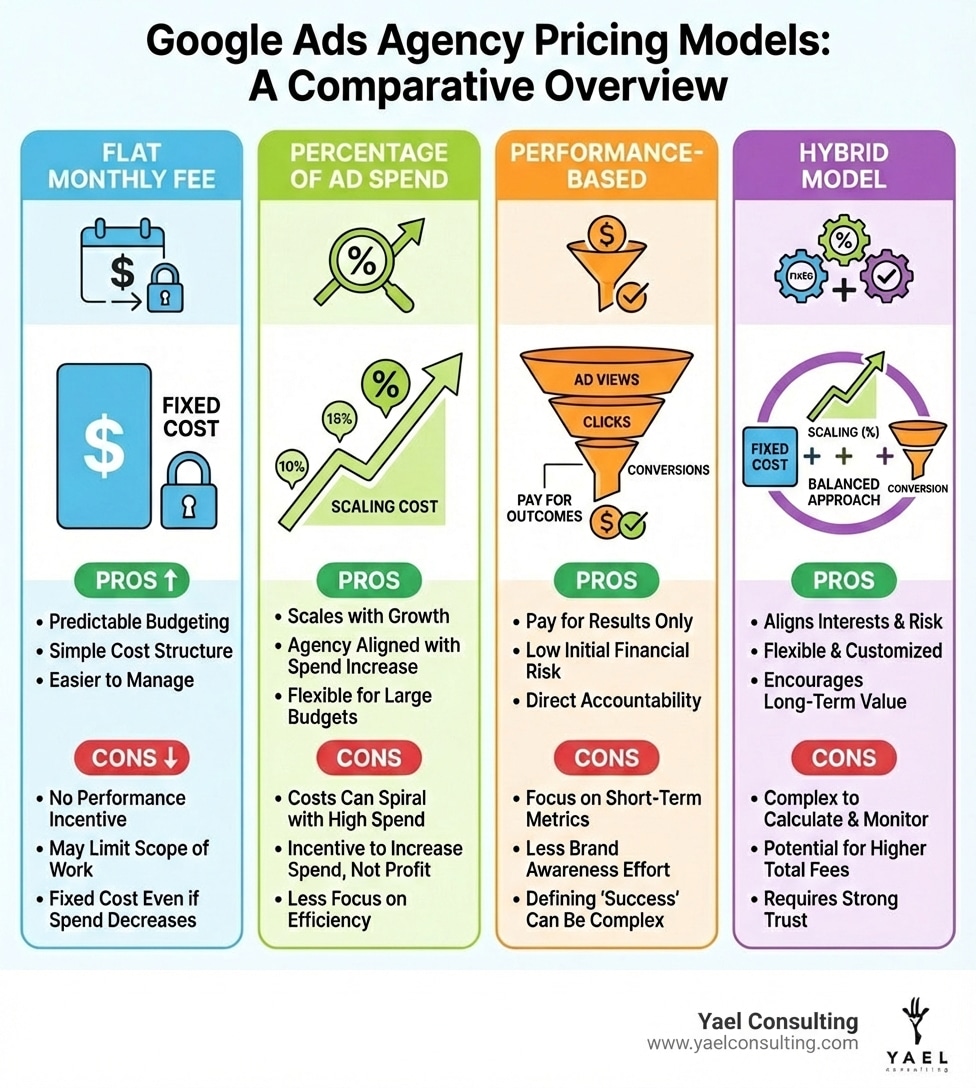
When we talk about Google Ads agency pricing, we’re primarily looking at four foundational models. Each has its own rhythm, its own set of advantages, and its own potential pitfalls. Let’s explore them so you can better understand what we’re comparing when we evaluate an agency’s proposal.
Flat Monthly Fee
This model is perhaps the easiest to understand. You pay a fixed amount each month for a defined set of services. It’s like paying a subscription: you know exactly what your bill will be, making budgeting wonderfully simple.
- Predictable costs: You know your exact management expense upfront, which is great for stable budgets.
- Budgeting simplicity: No surprises, no complex calculations. Just one number to factor in.
- Potential for agency complacency: The downside? If an agency is paid a flat fee regardless of results, their motivation to aggressively optimize your campaigns might wane over time. We’ve seen this lead to less proactive management and potentially neglected accounts.
- Best for: Businesses with stable needs and predictable budgets who value cost certainty above all else.
- Typical cost range: According to our research, flat monthly fees can range from $200 to $4,000 per month, with many agencies charging between $500 and $2,000. For more extensive campaigns, this can go up to $5,000+ per month.
Percentage of Ad Spend
This is one of the most common pricing models, especially for mid-sized to larger ad budgets. Here, the agency charges a percentage of the total amount you spend on Google Ads.
- Fee scales with campaign size: As your ad spend grows, so does the agency’s fee. This can be beneficial as the agency’s workload often increases with a larger budget.
- Aligns agency revenue with client investment: In theory, the agency is incentivized to help you spend more effectively, as their revenue is tied to your ad budget.
- Potential incentive to inflate ad spend: However, this model can sometimes create a conflict of interest. An agency might be incentivized to encourage higher ad spend, even if it’s not the most efficient path to your goals, simply to increase their management fee. We always recommend scrutinizing results, not just spend.
- Common range: Typically, agencies charge between 10-20% of your monthly ad spend. Some might go as low as 7% for very large budgets or as high as 30% for smaller ones.
- Best for: Growing accounts where the workload genuinely increases with budget, and where the agency can clearly demonstrate efficient use of ad spend to drive profitability.
Performance-Based Pricing
This model is often touted as the “fairest” approach, as you only pay the agency when they deliver specific results.
- Pay for results: This is the ultimate alignment of incentives. If the agency doesn’t perform, you don’t pay (or pay less).
- Strong incentive alignment for conversions: Agencies working on this model are highly motivated to optimize for your key performance indicators (KPIs) like leads or sales.
- Can be the most expensive model: While attractive, agencies often charge a premium per conversion or a higher percentage of revenue to account for the increased risk they’re taking.
- Agency assumes more risk: Since their income is directly tied to campaign outcomes, agencies bear more of the financial risk.
- Metrics used: This model typically involves paying a fixed amount per lead (Cost Per Lead – CPL), per acquisition (Cost Per Acquisition – CPA), or a percentage of the revenue generated (Revenue Share). Lead generation performance-based agreements often range from $15 to $150 per conversion, while e-commerce revenue share can be 10-30%.
- Best for: Businesses with clearly defined, trackable conversions and a willingness to pay more for guaranteed outcomes. This model requires robust tracking and agreement on attribution.
Hybrid Models (Fee + Percentage/Performance)
Many agencies, including us, find that a blended approach offers the best of all worlds, balancing predictability with performance incentives. Our research shows that roughly one-fifth of U.S. PPC firms now blend pricing structures.
- Balanced approach: These models combine elements of the flat fee, percentage of ad spend, and/or performance-based models. For example, a base flat fee for core services plus a percentage of ad spend above a certain threshold, or a base fee plus a bonus for hitting specific performance targets.
- Covers base operational costs while rewarding performance: This structure ensures the agency covers its operational costs while also being motivated to drive strong results.
- Can be complex to track: The downside is that these models can sometimes be more intricate to understand and track, requiring clear agreements and transparent reporting.
- Best for: Customized, long-term partnerships where both parties want a balance of predictability and incentive alignment. This is often ideal for growing businesses with evolving needs.
Key Factors That Influence Your Google Ads Agency Pricing
Why do two agencies with seemingly similar services quote wildly different prices? It’s rarely arbitrary. Several critical factors influence Google Ads agency pricing, affecting both the agency’s workload and the value they bring to your business.
Ad Spend & Campaign Scope
The size and complexity of your ad campaigns are primary drivers of management fees. It’s simply more work to manage a multi-channel, international campaign than a local one.
- Minimum ad spend requirements: Many reputable agencies won’t run valid tests or take on accounts spending less than $5k–$10k/month in ad spend. Why? Because below this threshold, it’s difficult to gather enough data to make informed optimization decisions and demonstrate meaningful results.
- Number of campaigns and ad groups: More campaigns, ad groups, keywords, and audience segments mean more time spent on setup, monitoring, and optimization.
- Complexity of campaign types: Managing diverse campaign types, such as Performance Max, Shopping, Display, YouTube, or Local campaigns, requires specialized expertise and more hands-on time. Our team is adept at navigating all different types of Google Ads.
- Account build vs. optimization: Building a brand-new account from scratch is a significant undertaking, requiring extensive keyword research, ad copy creation, and structural planning. Optimizing an existing, well-structured account might require less initial effort but more ongoing strategic refinement.
Industry Competition & CPCs
Your industry plays a huge role in determining not just your ad spend, but also the management effort required. Some industries are simply more competitive, driving up costs and complexity.

- High-value industries: Industries like Attorneys & Legal Services have a significantly higher average CPC, around $8.94 in the US. This is due to the high Customer Lifetime Value (LTV) of a single client. These campaigns require meticulous management to ensure every click counts.
- High-volume industries: Conversely, industries like Apparel & Fashion have a much lower average CPC of $3.39 in the US. While individual clicks are cheaper, the sheer volume and need for constant creative refreshes can still demand considerable agency resources.
- Impact of Customer Lifetime Value (LTV) on bidding: Businesses in industries with high LTV can afford to bid more aggressively and pay higher CPCs because the long-term value of a conversion justifies the expense. Agencies managing these accounts often dedicate more time to advanced bidding strategies and conversion tracking.
Agency Expertise & Track Record
You wouldn’t trust your heart surgery to a general practitioner, would you? The same principle applies to Google Ads. The experience and specialization of an agency directly impact its pricing.
- Boutique specialists vs. large full-service agencies: Boutique agencies, like ours, often specialize in a particular area (e.g., Google Ads for e-commerce and lead generation) and can offer deep expertise. Larger, full-service agencies might offer a broader range of services but may not have the same level of granular specialization in Google Ads.
- Years of experience: Agencies with a long track record, often 10+ years, have seen it all. They’ve steered countless algorithm changes and market shifts, bringing invaluable wisdom to your campaigns.
- Certifications and partnerships: Look for agencies with Google Partner or Premier Partner status (the latter is held by the top 3% of Google Partners). These certifications indicate a high level of proficiency and adherence to best practices.
- Proven case studies and client testimonials: A strong portfolio of successful campaigns and glowing client testimonials are clear indicators of an agency’s ability to deliver results.
- Agency overhead and efficiency: Agencies with high overhead (e.g., expensive offices, large sales teams) may pass those costs on to clients. However, efficient agencies with streamlined processes can offer competitive pricing while still delivering exceptional service. As our research highlights, well-performing, well-designed campaigns require less ongoing work than poorly managed ones, impacting agency costs and efficiency.
Geographic Targeting: Local vs. National Campaigns
The scope of your target audience significantly impacts Google Ads agency pricing. A local plumber in Los Angeles will have vastly different campaign needs and costs than a national e-commerce brand.
- Lower competition and CPCs for local campaigns: Local Google Ads campaigns generally have lower management fees and significantly lower cost-per-click because there is less competition for local keywords compared to broader, national terms. For example, local PPC management can start as low as $149–$199 per month.
- Increased complexity and budget needed for national or international targeting: National campaigns involve managing a much larger pool of keywords, audiences, and competitive landscapes. This requires more sophisticated strategies, robust tracking, and higher ad budgets.
- Market-specific trends and costs: Even within the USA, CPCs can vary. For example, a business targeting a niche market in New York City might face higher CPCs due to increased competition compared to one targeting a less saturated market in a smaller US city.
What’s Included in Management Fees (And What’s Not)
Understanding the scope of service is crucial to avoid surprise charges and ensure you’re getting what you pay for. A low management fee might seem attractive, but if it doesn’t include essential services, you could end up paying more in the long run or, worse, seeing poor results.
Standard Services to Expect in Your Google Ads Agency Pricing
When you hire a Google Ads agency, you should expect a comprehensive suite of services designed to maximize your campaign’s effectiveness.
- Strategic planning: This is where we define your goals, target audience, and overall campaign approach. It’s the blueprint for success.
- Keyword research: Using advanced tools like Google’s keyword planner, we identify the most relevant and profitable keywords for your business.
- Campaign building and structuring: This involves setting up campaigns, ad groups, and targeting parameters for optimal performance.
- Ad copywriting and A/B testing: Crafting compelling ad copy that resonates with your audience and constantly testing different variations to improve click-through rates and conversions.
- Bid management and budget pacing: Strategically managing your bids to get the most out of your budget and ensuring your spend is distributed effectively throughout the month.
- Performance monitoring and regular reporting: Keeping a close eye on campaign performance, identifying trends, and providing transparent reports on key metrics.
Understanding Your Google Ads Agency Pricing: Hidden Costs & Add-ons
Beware of proposals that seem too good to be true. Often, a very low management fee hides additional charges that can quickly inflate your total cost.
- One-time setup or onboarding fees: Many agencies charge an initial fee to cover the extensive work involved in setting up new campaigns, conducting initial audits, and integrating with your systems. These can range from $200 to over $1,500. For example, some entry-level plans for smaller budgets might include a $1,495 setup fee.
- Ad creative production (images, video): While ad copywriting might be included, designing compelling images or producing video ads is often an additional service, ranging from $300–$500 per refresh or creative piece.
- Landing page design and optimization: If your landing pages aren’t converting, even the best Google Ads campaigns will fall flat. Agencies may charge extra for designing or optimizing landing pages, with costs potentially around $1,200 or more per page.
- Third-party software costs: Agencies often use specialized tools for various functions. While some are included in their overhead, others might be billed directly to you. These can include:
- Click fraud detection: Tools like ClickCease ($71/month) or ClickGuard ($119/month) are crucial for protecting your ad spend from invalid clicks.
- Project management: Tools like Trello, Asana, or ClickUp (ranging from $12-$25/month per user) help manage tasks and communication.
- Reporting and analytics: Beyond Google Analytics, tools like Supermetrics (up to $579/month) or Semrush (around $250/month) provide deeper insights.
- The importance of account ownership and insisting on “read” privileges”: Always ensure that you, the client, retain full ownership of your Google Ads account. We strongly advise insisting on “read” privileges to your account. This allows you to log in, monitor activity, and understand what changes are being made, ensuring transparency and control over your valuable advertising assets.
How to Evaluate the ROI of Your Agency’s Fee
The cheapest agency is rarely the most profitable one. If an agency’s fee saves you $500 per month but costs you $5,000 in lost revenue due to poor campaign performance, it’s a false economy. Focus on the value and return your investment generates. Google Ads typically delivers an average 200% return on investment (ROI), but a great agency aims for much higher.
Moving Beyond ROAS: Key Performance Indicators (KPIs)
While Return On Ad Spend (ROAS) is a critical metric, it’s just one piece of the puzzle. A truly effective Google Ads strategy looks at a broader set of KPIs to measure success.
- Cost Per Acquisition (CPA): How much does it cost to acquire a new customer or generate a specific conversion? Lowering CPA is often a primary goal.
- Customer Lifetime Value (LTV): This metric looks at the total revenue a customer is expected to generate over their relationship with your business. Agencies that understand LTV can justify higher initial CPAs if those customers are highly valuable long-term.
- Conversion Rate (CVR): The percentage of ad clicks that result in a desired action (e.g., purchase, lead form submission). Higher CVR means more efficient ad spend.
- New-to-brand revenue vs. returning customers: For e-commerce businesses, understanding whether your ads are attracting new customers or simply recapturing existing ones is vital for sustainable growth.
- Blended ROAS and incrementality: This involves looking at the overall revenue generated across all marketing channels, not just Google Ads, and understanding the incremental impact of your ad spend. This helps avoid cannibalization and ensures holistic growth.
The Importance of Reporting & Transparency
A great agency doesn’t just manage your ads; they educate you on their performance and strategy. Transparency is paramount.
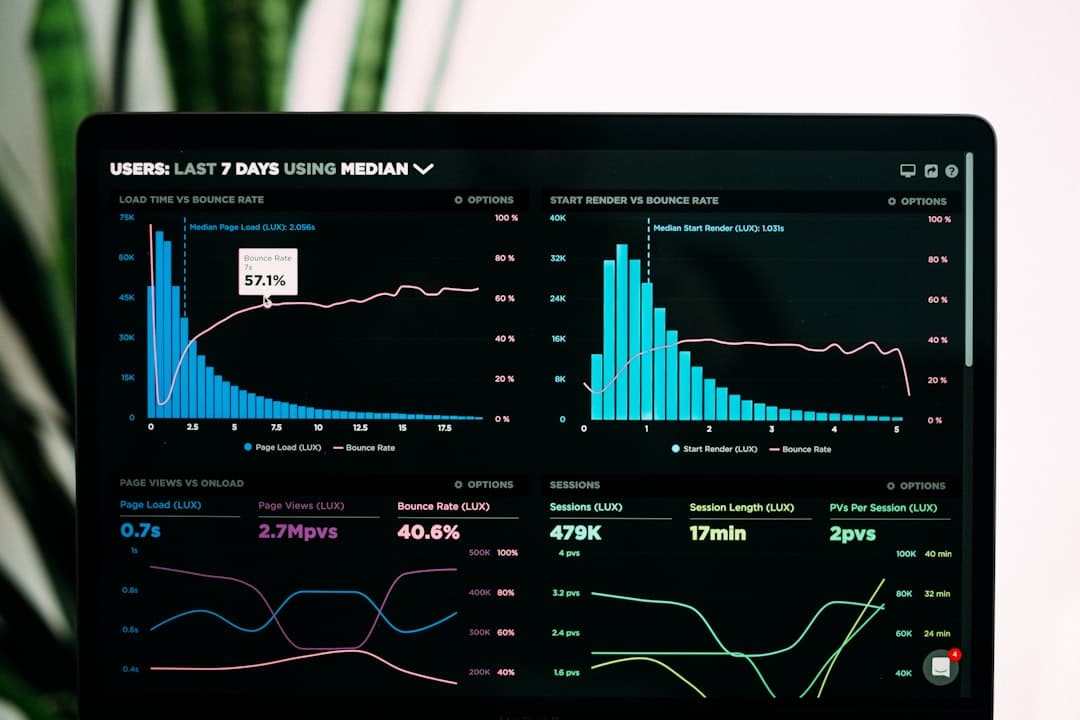
- What a good report includes: Beyond just numbers, a valuable report provides clear insights into what’s working, what’s not, and the strategic next steps. It should be easy to understand, even if you’re not a PPC expert.
- GA4 integration for a holistic view: Integrating with Google Analytics 4 (GA4) provides a unified view of your customer’s journey across your website and apps, offering deeper insights into user behavior and conversion paths.
- Tracking offline conversions: For many lead generation businesses, the conversion journey extends offline. A sophisticated agency will implement tracking for phone calls, in-store visits, or CRM-integrated lead statuses to provide a complete picture of your ad performance.
Frequently Asked Questions about Google Ads Management Fees
We often hear similar questions from businesses trying to steer the complex world of Google Ads agency pricing. Let’s tackle some of the most common ones.
How much should a small business pay for Google Ads management?
For small businesses, the typical range for Google Ads management fees in the US is $500 – $2,500 per month. This can vary based on your ad spend, the complexity of your campaigns, and the depth of services required. For example, entry-level local campaigns might start around $149–$199 per month, while more comprehensive campaigns with moderate ad spend could be $800-$1,500.
The key isn’t just minimizing the fee, but achieving a positive ROI. A $500 management fee on a $1,000 ad spend that generates $5,000 in revenue is a fantastic deal. A $150 management fee on a $500 ad spend that generates no revenue is a waste. We always advise focusing on the net profit generated, not just the cost.
Why do some agencies charge so much more than others?
The difference in pricing often boils down to several factors:
- Expertise and efficiency: Highly experienced agencies, especially those with 15+ years in the field like us, have refined processes and deep knowledge that allows them to be more efficient and achieve better results. As our research suggests, well-performing campaigns require less ongoing work than poorly managed ones, and efficient agencies can deliver more value.
- Overhead: Agencies with higher overheads (e.g., extensive sales teams, large offices, proprietary technology) typically pass some of those costs onto clients. However, some of this overhead, such as advanced tools and dedicated specialists, directly contributes to better performance.
- Depth of service: A higher fee often includes a more comprehensive suite of services: advanced strategy development, creative production (ad copy, images, videos), landing page optimization, in-depth analytics, custom reporting, and proactive communication. Lower-cost providers might only offer basic campaign management, leaving you to handle crucial elements yourself.
- Specialization: Agencies that specialize in a particular niche (e.g., e-commerce, lead generation, specific industries) can charge more because their expertise translates to faster, more impactful results.
You’re paying for the agency’s ability to save you money on ad spend, increase your conversions, and grow your revenue. Sometimes, paying more upfront for a highly skilled agency can lead to significantly better ROI in the long run.
Is a percentage of ad spend model always bad for the client?
Not at all! While it can create an incentive for agencies to simply increase ad spend, it’s not inherently bad. For growing accounts, particularly those in e-commerce or rapidly scaling lead generation, a percentage of ad spend model can be quite fair. As your ad budget increases, the complexity and workload for the agency often increase proportionally.
The key is to ensure the agency is focused on efficiency and profitability, not just increasing spend to boost their fee. A reputable agency using this model will:
- Prioritize ROAS/CPA: Their primary goal should be to improve your return on ad spend or lower your cost per acquisition, even if it means not spending your entire budget.
- Be transparent: They should provide clear reporting that shows not just how much was spent, but what revenue or leads were generated and at what cost.
- Have clear communication: They should explain their rationale for budget increases and how those increases are expected to drive profitable growth.
When structured correctly, with clear KPIs and mutual trust, the percentage of ad spend model can align incentives and lead to significant growth for your business.
Conclusion: Choosing the Right Partner for Profitable Growth
Navigating Google Ads agency pricing can feel like deciphering a complex puzzle, but it doesn’t have to be. The best pricing model for your business is the one that aligns perfectly with your specific goals, budget predictability, and desired level of risk. Whether it’s a flat fee for stability, a percentage of ad spend for scalability, a performance-based model for outcome focus, or a hybrid approach, the ultimate goal remains the same: profitable growth.
We’ve seen that true value in Google Ads management isn’t found in the lowest price, but in the expertise, efficiency, and transparency of your agency partner. Look for an agency that prioritizes your profitability, not just managing your spend. A transparent agency with a proven track record, backed by years of experience and a commitment to measurable results, will help you turn your ad budget into a powerful engine for growth.
At Yael Consulting, we believe in demonstrating value from day one. That’s why we offer a free, actionable 15-minute Google Ads analysis. We’ll dive into your current account, identify immediate opportunities for improvement, and show you exactly how our proprietary technology and direct CEO involvement can drive significant sales and profit growth for your e-commerce or lead generation business. There’s no obligation, just pure, unadulterated insight.
Get your free, no-obligation Google Ads analysis and let us help you find the right pricing model and focus on value and ROI that truly moves the needle for your business.